Table of Contents
Get started with MyPerfectResume today!
- Build a resume on any device
- Pick an ATS-friendly template
- Tailor with AI copy suggestions
Why this resume works
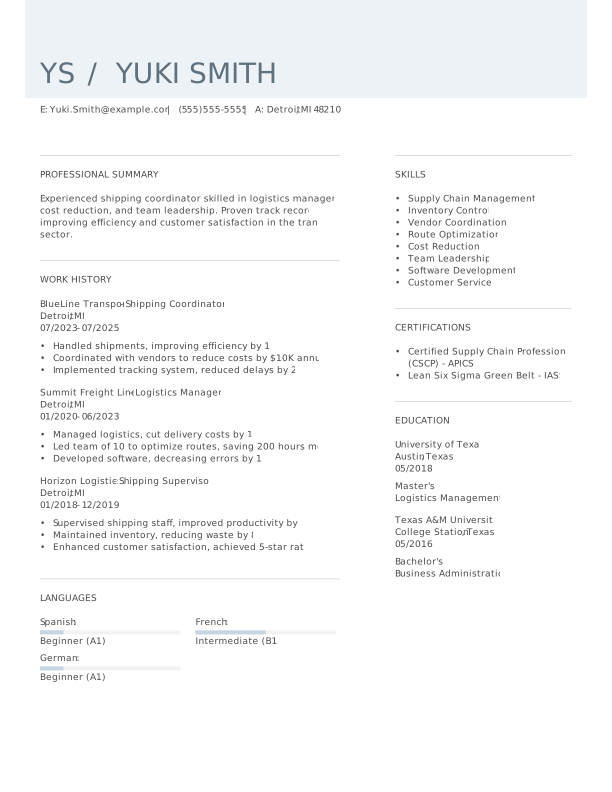
- Quantifies accomplishments: By using metrics to quantify their accomplishments, like reducing delivery costs by 12% and saving 200 hours monthly, the applicant shows the extent of their impact.
- Highlights industry-specific skills: Including skills in “logistics management,” “route optimization,” and “vendor coordination” showcases industry-specific expertise tailored to shipping roles, emphasizing skills critical for efficiency and cost-saving efforts.
- Showcases career progression: Career progression from shipping supervisor to shipping coordinator highlights growth through increasing responsibility, including leading teams and implementing impactful strategies across different organizations.
More Shipping Resume Examples
These shipping resume examples showcase how to highlight logistics, inventory management, and customer service skills. Use these samples to create a standout resume that showcases your expertise in the shipping industry.
Entry-level shipping resume
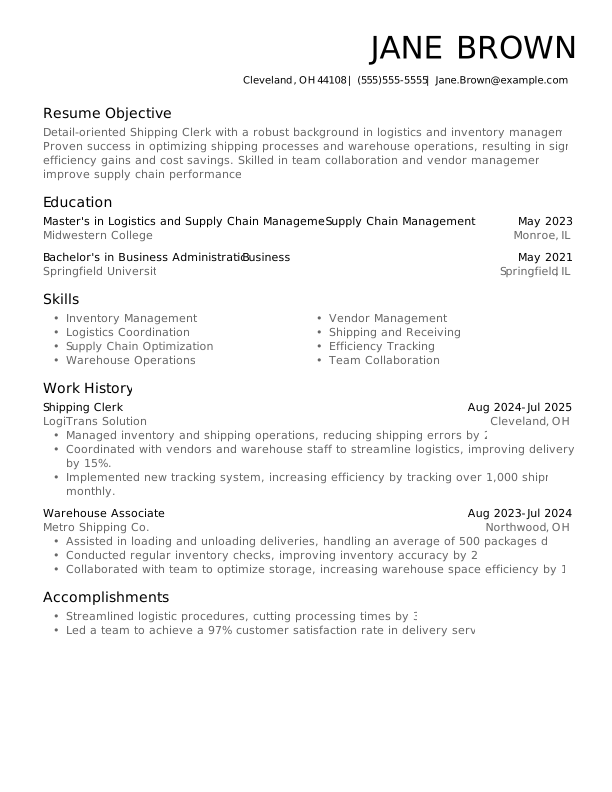
Why this resume works
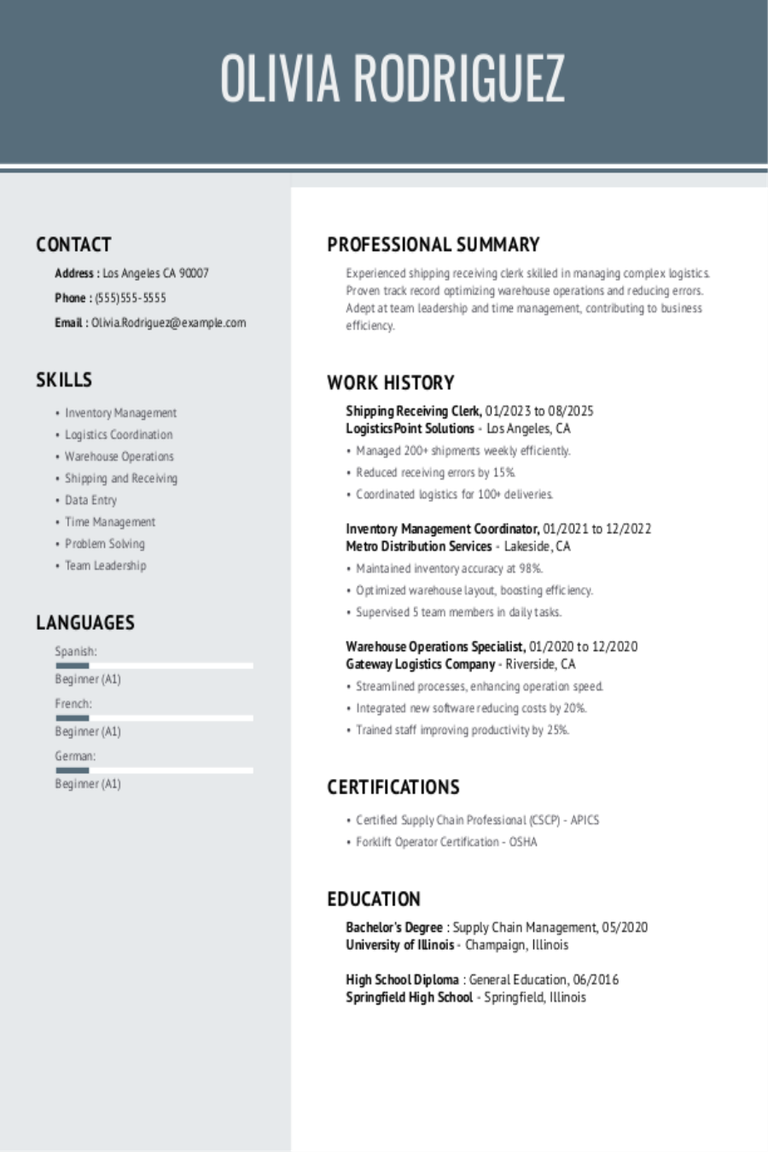
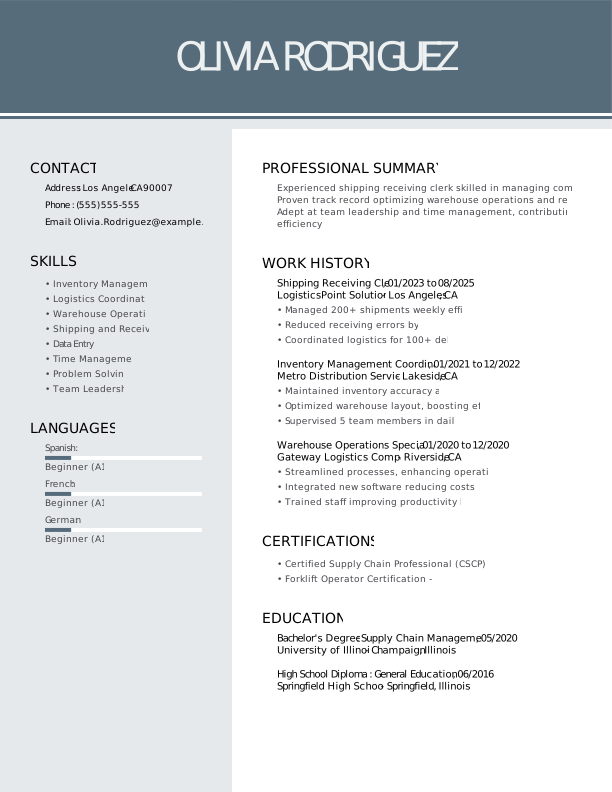
- Effective use of keywords: Strategically weaving industry-specific keywords like logistics coordination and inventory management ensures alignment with ATS requirements.
- Shows digital literacy: Integrating tools such as tracking systems and efficiency software showcases the computer skills necessary to excel in tech-driven workplaces.
- Centers on academic background: Featuring advanced degrees in supply chain management and business emphasizes academic depth, setting a strong foundation for career growth at an early stage.
Mid-level shipping resume
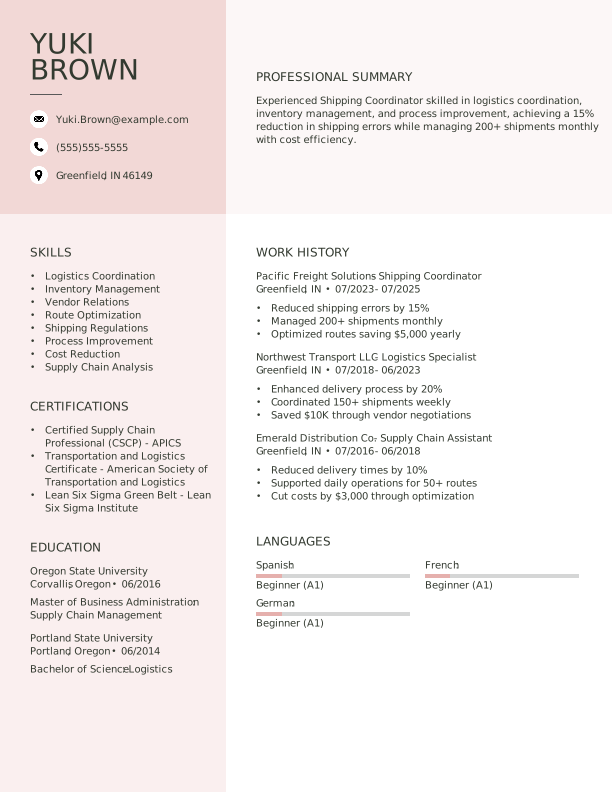
Why this resume works
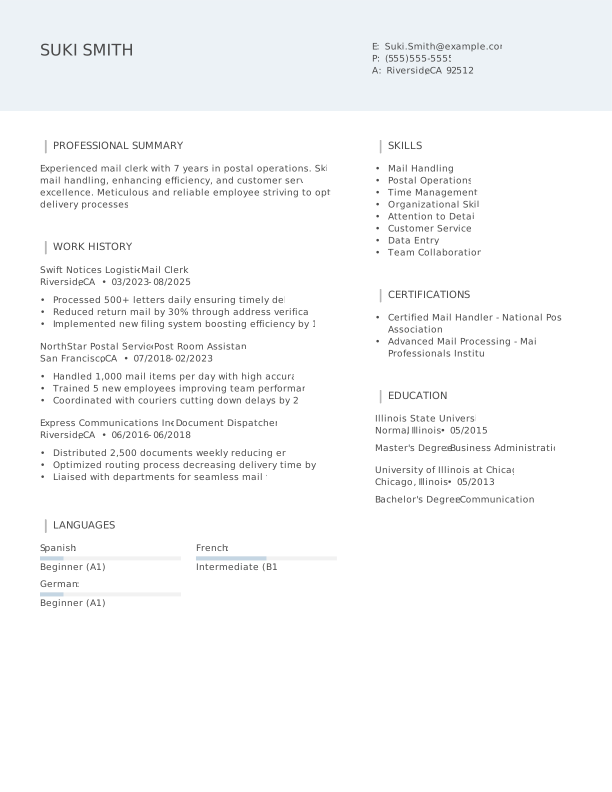
- Points to measurable outcomes: By illustrating a 15% reduction in shipping errors, the applicant effectively showcases their capability to deliver tangible improvements within logistical operations.
- Sections are well-organized: Effective use of bullet points and headers makes the resume easy to scan, ensuring key achievements are quickly accessible and improving readability.
- Demonstrates language abilities: The applicant’s language skills in Spanish, French, and German allow them to support cross-cultural communication within international logistics environments.
Experienced shipping resume
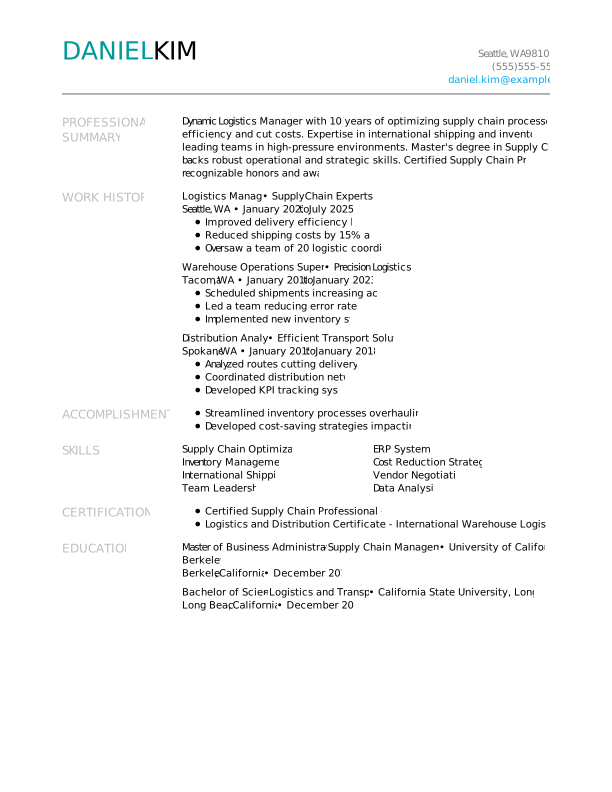
Why this resume works
- Showcases impressive accomplishments: The applicant’s ability to improve delivery efficiency by 30% and cut shipping costs by 15% annually reflects accomplishments with significant business impact.
- Uses action-oriented language: Action verbs such as “improved,” “reduced,” and “oversaw” convey initiative and effectiveness, demonstrating proactive contributions.
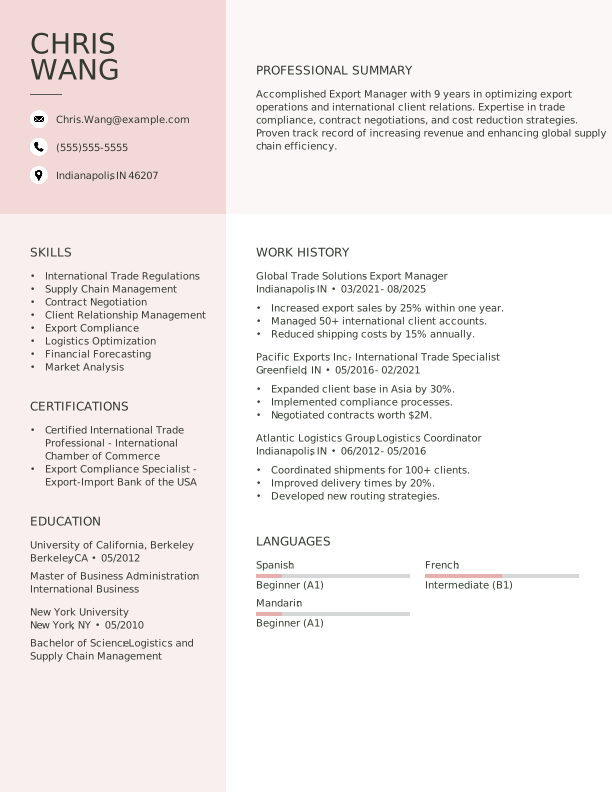
- Focuses on work history: A chronological resume structure shows extensive career history, showcasing a solid progression from analyst to logistics manager.
Explore Even More Shipping Resumes
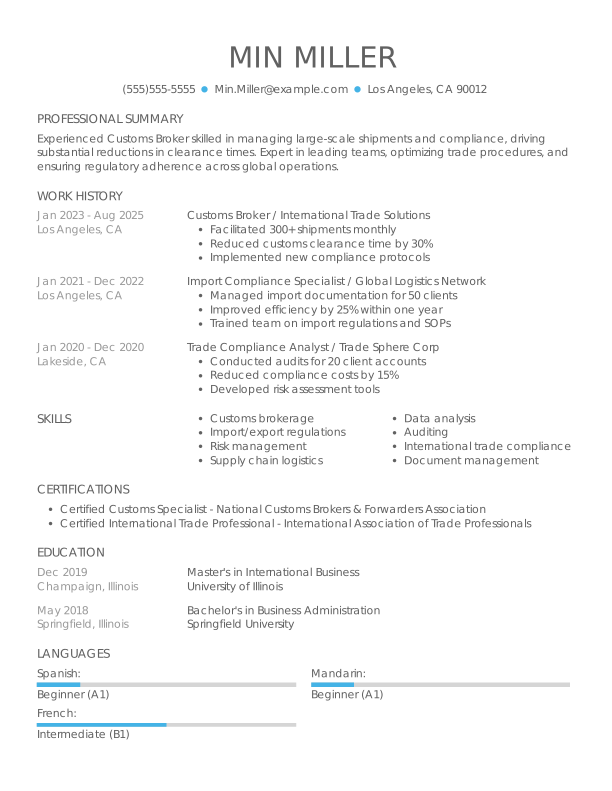
Shipping Resume Template (Text Version)
Find a style that suits you. Copy the template below, then browse our free resume templates for more choices.
Yuki Smith
Detroit, MI 48210
(555)555-5555
Yuki.Smith@example.com
Professional Summary
Experienced shipping coordinator skilled in logistics management, cost reduction, and team leadership. Proven track record of improving efficiency and customer satisfaction in the transport sector.
Work History
Shipping Coordinator
BlueLine Transport – Detroit, MI
July 2023 – July 2025
- Handled shipments, improving efficiency by 15%
- Coordinated with vendors to reduce costs by $10K annually
- Implemented tracking system, reduced delays by 20%
Logistics Manager
Summit Freight Lines – Detroit, MI
January 2020 – June 2023
- Managed logistics, cut delivery costs by 12%
- Led team of 10 to optimize routes, saving 200 hours monthly
- Developed software, decreasing errors by 18%
Shipping Supervisor
Horizon Logistics – Detroit, MI
January 2018 – December 2019
- Supervised shipping staff, improved productivity by 25%
- Maintained inventory, reducing waste by 8%
- Enhanced customer satisfaction, achieved 5-star ratings
Languages
- Spanish – Beginner (A1)
- French – Intermediate (B1)
- German – Beginner (A1)
Skills
- Supply Chain Management
- Inventory Control
- Vendor Coordination
- Route Optimization
- Cost Reduction
- Team Leadership
- Software Development
- Customer Service
Certifications
- Certified Supply Chain Professional (CSCP) – APICS
- Lean Six Sigma Green Belt – IASSC
Education
Master’s Logistics Management
University of Texas Austin, Texas
May 2018
Bachelor’s Business Administration
Texas A&M University College Station, Texas
May 2016
Browse Resume Examples by Industry
- Aviation
- Banking
- Billing And Collections
- Biology
- Boating
- Business Operations
- Casino
- Chemistry
- Child Care
- Civil Engineering
- Compliance
- Computer Hardware
- Computer Software
- Construction
- Copywriting
- Cosmetology
- Costco
- Culinary
- Customer Service
- Dance
- Data Systems Administration
- Deloitte
- Dentistry
- Driving
- Education
- Electrical
- Electrical Engineering
- Energy
- Engineering
- Entertainment
- Entrepreneur
- Entry Level
- Environmental
- Environmental Science
- Event Planning
- Executive
- Fashion
- Film
- Finance
- Fitness & Nutrition
- Food Service
- Freelancing
- General Laborer
- Goldman Sachs
- Government
- Graphic Design
- Healthcare Support
- Hospitality
- Human Resources
- HVAC
- Industrial Engineering
- Information Technology
- Insurance
- Interior Design
- Inventory Management
- Janitorial
- Landscaping
- Language Services
- Law
- Law Enforcement
- Library
- Logistics
- Maintenance
- Marketing
- McKinsey
- Mechanical Engineering
- Mechanics
- Media And Communication
- Medical
- Mental Health
- Meta
- Metal Work
- Military
- Mining
- Museum
- Music
- Netflix
- Non Profit
- Nursing
- Pharmaceutical
- Photography
- Physical Therapy
- Plumbing
- Politics
- Production
- Program Manager
- Project Manager
- Psychology
- Purchasing
- Quality Control
- Real Estate
- Religion
- Retail
- Safety And Security
- Sales
- Sciences
- Social Services
- Special Education
- Sports
- Statistics
- Student
- Teaching
- Team Lead
- Tesla
- Training And Development
- Transportation
- Travel
- Veterinary
- Walgreens
- Walmart
- Web Development
Advice for Writing Your Shipping Resume
Lear how to craft a standout resume for a shipping position. Whether you’re navigating logistics or managing warehouse operations, we’ve got tips tailored just for you.
Explore how to highlight your organizational skills, attention to detail, and experience in the fast-paced world of shipping.
Highlight relevant technical skills
Technical skills are key for a shipping role, as they help ensure that shipments are prepared, managed, and tracked efficiently.
In your resume, consider creating a dedicated technical skills section to list these abilities clearly. Alternatively, you might integrate them into your work experience section to highlight how you’ve applied these technical skills in real-world scenarios.
Common technical skills for shipping roles include:
- Using inventory management software and barcode scanning systems
- Understanding shipping regulations
- Familiarity with tools like forklifts and pallet jacks
- Knowing how to navigate logistics software and tracking systems
- Streamlining operations and boosting delivery accuracy
When listing your skills, be specific about the software or tools you’re experienced with. For instance, mention if you’re skilled in using SAP for inventory management or FedEx Ship Manager for processing shipments.
By being specific you help employers see that you have hands-on experience with the tools they use or similar ones. Including such details makes your resume stand out and shows you’re ready to handle the technical demands of a shipping role.
Example of a technical skills section
- Logistics management systems (LMS)
- Inventory management software (SAP, Oracle)
- Warehouse management systems (WMS)
- Supply chain optimization
- Freight forwarding and customs regulations
- Radio frequency identification (RFID) technology
- Microsoft Excel for data analysis
- Transportation management software (TMS)
Show off your teamwork, leadership, and adaptability on your resume as well because these soft skills are super important at work!
Quantify your accomplishments
Quantifying your accomplishments in a shipping role makes your resume stand out by showing real results rather than just listing tasks.
When you use numbers and measurable outcomes, like percentages or time saved, it shows employers exactly what you achieved. For example, instead of saying “managed shipments,” you could say “reduced shipping costs by 15% over one year.” This helps hiring managers quickly see the impact you’ve had in previous roles.
In the work experience section, it’s important to include details like job title, employer name, location, and employment dates. But don’t stop there—turn duties into achievements with metrics. Use action verbs like “improved,” “increased,” or “optimized” to start each bullet point. For instance, if you improved delivery times at your last job, quantify it with a statement like “improved delivery schedule efficiency by 20% through route optimization.”
By focusing on quantified accomplishments, you allow hiring managers to quickly understand your skills and contributions. They can see how effective you’ve been and predict how you might perform in their company. This approach creates a results-driven resume that highlights your strengths clearly and compellingly.
5 shipping work history bullet point examples
- Coordinated the shipment of over 1,000 packages monthly, achieving a 98% on-time delivery rate.
- Streamlined inventory tracking processes, reducing shipping errors by 25% and improving workflow efficiency.
- Negotiated contracts with freight carriers, lowering transportation costs by 15% annually.
- Implemented new packaging protocols that decreased product damage during transit by 20%.
- Trained and supervised a team of eight warehouse staff to meet daily shipping targets consistently.
Need help writing your resume? Check out our professional resume examples to see creative ways to share your skills and work history.
Write a powerful professional summary
A professional summary serves as an introduction for hiring managers. It helps them quickly understand who you are and what you bring to the table. When crafting your resume, you’ll need to choose between writing a professional summary or a resume objective depending on your level of experience.
A professional summary is typically three to four sentences that highlight your experience, skills, and achievements. It’s best for those with experience in shipping roles. The purpose is to showcase your professional identity and the value you offer.
In contrast, a resume objective outlines career goals. It’s most suitable for entry-level job seekers, career changers, or those with employment gaps. Think of a summary as “what I’ve accomplished” and an objective as “what I aim to contribute.”
Now that we’ve explored these concepts, let’s dive into examples of both summaries and objectives tailored for various industries and experience levels.
Shipping resume summary examples
Entry-level
Recent Bachelor of Science in Logistics and Supply Chain Management graduate with foundational knowledge in shipping operations and inventory control. Familiar with warehouse management systems (WMS) and eager to apply classroom learning to real-world shipping processes. Detail-oriented and enthusiastic about contributing to efficient supply chain operations.
Mid-career
Experienced shipping coordinator with over seven years in managing domestic and international shipments for manufacturing companies. Proven track record in optimizing shipment routes, reducing freight costs, and ensuring timely delivery. Skilled in vendor negotiation, customs documentation, and using transport management software (TMS). Recognized for improving on-time delivery rates by 25% through process enhancements.
Experienced
Seasoned shipping manager with 15+ years overseeing large-scale distribution centers, specializing in strategic logistics planning and team leadership. Expertise in multimodal transportation networks and RFID technology implementation for inventory accuracy. Successfully led cross-functional teams to achieve a 30% reduction in lead time across global supply chains while maintaining top-tier customer satisfaction levels.
Shipping resume objective examples
Entry-level
Detail-oriented individual with a background in logistics and supply chain management seeking an entry-level shipping position. Eager to contribute organizational and time management skills to ensure efficient processing and delivery of goods, while gaining hands-on experience in the industry.
Career changer
Customer service professional transitioning into the shipping field, bringing strong communication and problem-solving abilities. Looking to leverage existing skills in a fast-paced shipping environment to facilitate smooth operations and exceed client expectations.
Recent graduate
Recent business administration graduate with coursework in supply chain operations seeking a shipping role where analytical skills can be used to optimize logistical processes. Driven to learn and grow in a collaborative team setting while contributing to timely and accurate shipment handling.
Choose a resume template with clear sections and simple fonts. Stay away from busy designs or excessive colors to make your skills and experience shine effortlessly.
Showcase your credentials
For jobs in shipping, listing certifications is important because it shows your skills and knowledge in handling goods safely and efficiently. Certifications prove you know industry standards and can follow best practices.
Being certified can help you stand out from other applicants. Creating a dedicated certifications section on your resume makes these credentials easy to find.
This section complements your education background and gives a fuller picture of your expertise. Some sought-after certifications for roles in shipping include:
- Certified Logistics Associate
- Certified Supply Chain Professional
- Dangerous Goods Transportation Certification
- Forklift Operator License
- Hazardous Materials Endorsement
These certifications show that you are prepared for the challenges in shipping jobs. They demonstrate your commitment to learning more about the field and keeping up with industry changes. Including them on your resume can help you get noticed by employers who value specialized training.
Example of a certifications section
Certified Logistics Associate (CLA)
Issued by: Manufacturing Skill Standards Council (MSSC)
Certified Supply Chain Professional (CSCP)
Issued by: Association for Supply Chain Management (ASCM)
Choose a chronological resume format if you have steady work history in shipping, but opt for a functional or combination format if you’re changing careers, have employment gaps, or want to emphasize skills over job titles.
FAQ
Do I need to include a cover letter with my shipping resume?
Yes, including a cover letter with your shipping resume can boost your application and make you more attractive to employers.
A cover letter lets you show your enthusiasm for the role and share specific skills or experiences that stand out in the shipping industry.
For example, if the company focuses on international logistics or uses specialized shipping software, you can mention any relevant background or expertise with those systems.
You might find it useful to try a tool like our Cover Letter Generator to create a tailored cover letter that complements your resume and showcases your strengths.
Additionally, reviewing cover letter examples designed for logistics and shipping roles could give you helpful ideas and inspiration.
How long should a shipping resume be?
For a shipping role, aim for a one-page resume to effectively highlight key skills and experiences. Focus on your skill in logistics software, attention to detail, and experience with shipping procedures.
If you have extensive experience or specialized certifications relevant to shipping, extending to a two-page resume can be appropriate. Ensure each section is directly related to the role, showcasing your ability to manage shipments efficiently and highlighting recent positions that demonstrate your expertise.
Check out our guide on how long a resume should be for more examples and tips tailored to different career stages.
How do you write a shipping resume with no experience?
To craft a shipping resume with no experience, emphasize your skills, education, and any related activities that show your potential for the position. Here are some tips to help you begin:
- Emphasize transferable skills: Highlight abilities such as attention to detail, organization, communication, and time management. These are important in shipping roles and can be gained from school projects or part-time jobs.
- Include relevant coursework or training: If you’ve taken classes related to logistics, supply chain management, or business administration, mention them prominently. This shows you have foundational knowledge applicable to shipping.
- Showcase volunteer work or internships: Any volunteer positions or internships where you handled inventory, managed supplies, or coordinated deliveries should be detailed under experience. Even if unpaid, they provide practical insights into shipping processes.
- Highlight technical skills: Familiarity with software like Excel for managing shipments or any experience with tracking systems is valuable. List these skills to show you’re ready to handle the technical aspects of the job.
Consider tailoring each resume submission to match specific roles by highlighting particular skills and experiences relevant to each job description.
Rate this article
Shipping


Toni is a Certified Professional Resume Writer (CPRW) and member of the Professional Association of Resume Writers & Career Coaches. She is committed to helping job seekers navigate the job market and succeed in their careers.
More Articles by Toni Frana, CPRWShare this page
 Add MyPerfectResume as a preferred source on Google
Add