Table of Contents
Get started with MyPerfectResume today!
- Build a resume on any device
- Pick an ATS-friendly template
- Tailor with AI copy suggestions
Why this resume works
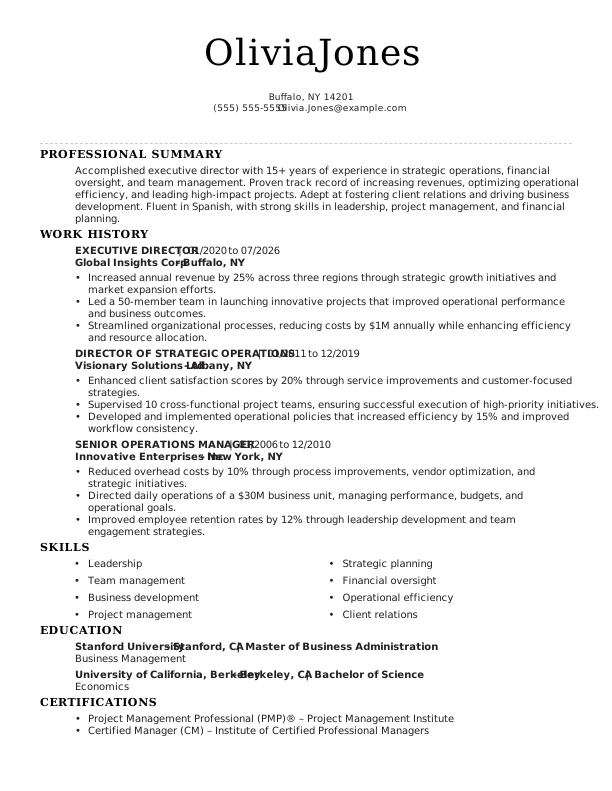
- Quantifies accomplishments: By showcasing measurable accomplishments, such as increasing annual revenue by 25% across three regions through strategic growth initiatives, the applicant’s quantifiable impact shines.
- Uses action-oriented language: Strong action verbs like “led,” “directed,” and “improved” emphasize initiative and effectiveness, painting a dynamic picture of the applicant’s capabilities as an executive director.
- Illustrates problem-solving ability: Streamlining organizational processes to reduce costs by $1M annually shows innovative problem-solving skills and critical thinking.
More Executive Resume Examples
Browse more executive resume examples to learn how to highlight leadership skills, strategic vision, and impactful achievements. These samples will guide you in crafting a compelling resume for C-suite roles.
CEO Resume

Why this resume works
- Effective use of keywords: Strategically integrating relevant keywords, such as “business development” and “executive leadership,” the applicant ensures their resume is optimized for ATS, improving visibility for high-level roles.
- Shows digital literacy: By using various technical tools such as CRM platforms and ERP systems, the applicant demonstrates strong computer skills and digital literacy essential in modern workplaces.
- Centers on academic background: The education section showcases the applicant’s MBA, reinforcing the strategic, financial, and leadership expertise that supports their executive experience.
CFO Resume

Why this resume works
- Points to measurable outcomes: By detailing accomplishments like managing a $150M+ annual budget and increasing profit margins by 12%, the applicant emphasizes a results-driven approach backed by measurable success in business growth initiatives.
- Includes a mix of soft and hard skills: Combining technical expertise in financial analysis with interpersonal skills like team leadership shows a balanced ability to strategize and collaborate effectively across roles.
- Demonstrates management abilities: Experience leading a 50+ member finance team indicates the applicant’s strong leadership skills and effective management abilities.
COO Resume

Why this resume works
- Focuses on work history: Using a chronological resume format, the applicant’s career progression is mapped out, showcasing their rich experience and achievements across varied roles, from senior operations manager to COO.
- Lists relevant certifications: Highlighting certifications like APICS and PMI reinforces the candidate’s technical prowess and dedication to continuous learning.
- Emphasizes leadership skills: By leading cross-functional project teams to execute strategic initiatives, the applicant effectively showcases leadership skills and an ability to drive meaningful business outcomes.
Executive Resume Template (Text Version)
Copy the text-version executive resume template below to get started, then visit our resume templates for layout inspiration and customizable designs.
Olivia Jones
Buffalo, NY 14201
(555) 555-5555
Olivia.Jones@example.com
PROFESSIONAL SUMMARY
Accomplished executive director with 15+ years of experience in strategic operations, financial oversight, and team management. Proven track record of increasing revenues, optimizing operational efficiency, and leading high-impact projects. Adept at fostering client relations and driving business development. Fluent in Spanish, with strong skills in leadership, project management, and financial planning.
WORK HISTORY
Global Insights Corp – Buffalo, NY
EXECUTIVE DIRECTOR
January 2020 – July 2026
- Increased annual revenue by 25% across three regions through strategic growth initiatives and market expansion efforts.
- Led a 50-member team in launching innovative projects that improved operational performance and business outcomes.
- Streamlined organizational processes, reducing costs by $1M annually while enhancing efficiency and resource allocation.
Visionary Solutions Ltd – Albany, NY
DIRECTOR OF STRATEGIC OPERATIONS
January 2011 – December 2019
- Enhanced client satisfaction scores by 20% through service improvements and customer-focused strategies.
- Supervised 10 cross-functional project teams, ensuring successful execution of high-priority initiatives.
- Developed and implemented operational policies that increased efficiency by 15% and improved workflow consistency.
Innovative Enterprises Inc – New York, NY
SENIOR OPERATIONS MANAGER
January 2006 – December 2010
- Reduced overhead costs by 10% through process improvements, vendor optimization, and strategic initiatives.
- Directed daily operations of a $30M business unit, managing performance, budgets, and operational goals.
- Improved employee retention rates by 12% through leadership development and team engagement strategies.
SKILLS
- Leadership
- Strategic planning
- Team management
- Financial oversight
- Business development
- Operational efficiency
- Project management
- Client relations
EDUCATION
Stanford University, Stanford, CA
Master of Business Administration, Business Management
University of California, Berkeley, Berkeley, CA
Bachelor of Science, Economics
Certifications
- Project Management Professional (PMP)® – Project Management Institute
- Certified Manager (CM) – Institute of Certified Professional Managers
Related Resume Guides
- Aviation
- Banking
- Billing And Collections
- Biology
- Boating
- Business Operations
- Casino
- Chemistry
- Child Care
- Civil Engineering
- Compliance
- Computer Hardware
- Computer Software
- Construction
- Copywriting
- Cosmetology
- Costco
- Culinary
- Customer Service
- Dance
- Data Systems Administration
- Deloitte
- Dentistry
- Driving
- Education
- Electrical
- Electrical Engineering
- Energy
- Engineering
- Entertainment
- Entrepreneur
- Entry Level
- Environmental
- Environmental Science
- Event Planning
- Fashion
- Film
- Finance
- Fitness & Nutrition
- Food Service
- Freelancing
- General Laborer
- Goldman Sachs
- Government
- Graphic Design
- Healthcare Support
- Hospitality
- Human Resources
- HVAC
- Industrial Engineering
- Information Technology
- Insurance
- Interior Design
- Inventory Management
- Janitorial
- Landscaping
- Language Services
- Law
- Law Enforcement
- Library
- Logistics
- Maintenance
- Marketing
- McKinsey
- Mechanical Engineering
- Mechanics
- Media And Communication
- Medical
- Mental Health
- Meta
- Metal Work
- Military
- Mining
- Museum
- Music
- Netflix
- Non Profit
- Nursing
- Pharmaceutical
- Photography
- Physical Therapy
- Plumbing
- Politics
- Production
- Program Manager
- Project Manager
- Psychology
- Purchasing
- Quality Control
- Real Estate
- Religion
- Retail
- Safety And Security
- Sales
- Sciences
- Shipping
- Social Services
- Special Education
- Sports
- Statistics
- Student
- Teaching
- Team Lead
- Tesla
- Training And Development
- Transportation
- Travel
- Veterinary
- Walgreens
- Walmart
- Web Development
Advice for Writing Your Executive Resume
Explore expert advice on writing a resume that showcases your leadership experience, strategic vision, and measurable business impact. Learn how to present the accomplishments, executive competencies, and career milestones that matter most to hiring boards and executive recruiters.
Highlight your most relevant skills
An executive resume should emphasize the leadership competencies and business expertise that have defined your career. While a dedicated skills section on your resume can provide a quick overview of your qualifications, it should focus on executive-level capabilities such as strategic planning, P&L management, organizational transformation, corporate governance, mergers and acquisitions, change management, operational excellence, and stakeholder engagement.
Your most important skills should also be reinforced throughout your work experience. Rather than simply listing “leadership” or “strategic planning,” demonstrate these capabilities with measurable accomplishments. For example, describe how you led a company-wide transformation, increased revenue, improved operational efficiency, or guided an organization through a period of growth or change.
Executive recruiters look for evidence of business impact, not just a list of competencies. By pairing your executive skills with quantifiable achievements, you’ll show employers how you’ve influenced organizational performance and the value you can bring to your next leadership role.
Executive resumes are often two pages because they need space to communicate leadership experience, business results, and career progression. Focus on quality over quantity by emphasizing your most significant accomplishments rather than listing every responsibility.
Showcase your accomplishments
Organize your executive work experience in reverse-chronological order, beginning with your current or most recent leadership role. For each position, include your job title, company name, location, and dates of employment. Focus on the most relevant 10 to 15 years of executive experience, summarizing earlier roles if they no longer support your current career goals.
Rather than listing day-to-day responsibilities, emphasize the strategic initiatives you led and the business results you delivered. Executive recruiters want to see evidence of organizational impact, such as revenue growth, market expansion, operational improvements, successful transformations, or cost savings.
Whenever possible, quantify your achievements with metrics that demonstrate the scope of your leadership and decision-making. Use strong action verbs like “spearheaded,” “transformed,” “accelerated,” “optimized,” or “directed” to describe your accomplishments.
Highlight the size of the organizations, budgets, teams, or business units you managed to provide context for your leadership experience. By focusing on measurable outcomes instead of routine responsibilities, you’ll demonstrate the executive-level value you’ve brought to previous organizations.
5 executive work history bullet points
- Led a strategic overhaul of the sales department, resulting in a 25% increase in annual revenue and exceeding targets for three consecutive years.
- Implemented a digital transformation strategy that reduced operational costs by 30% through automation and streamlined processes.
- Spearheaded the launch of a new product line, capturing a 15% market share within the first year and boosting overall brand recognition.
- Negotiated high-stakes contracts with global partners, securing $10 million in new business and expanding the company’s international footprint.
- Directed cross-functional teams to improve customer satisfaction scores by 40%, improving client retention rates significantly.
Executive resumes don’t need to include every position you’ve held. Prioritize the roles and accomplishments most relevant to your target position, and summarize earlier career experience with a brief “Previous Experience” section if needed. This keeps the resume focused on your executive leadership and strategic impact.
Write a strong professional summary
A professional summary serves as the executive introduction at the top of your resume, giving hiring committees and recruiters a concise overview of your leadership background, strategic expertise, and career impact. For senior-level professionals, this section is an opportunity to quickly communicate your executive brand and the value you bring to an organization.
Typically three to four sentences long, an executive resume summary should highlight your leadership experience, areas of expertise, and measurable achievements. Focus on accomplishments such as driving business growth, leading organizational transformation, improving operational performance, or managing large teams and budgets. Rather than simply listing skills, use this section to demonstrate the results you’ve delivered throughout your career.
While resume objectives can be useful for entry-level candidates, career changers, or professionals returning to the workforce, they are rarely used on executive resumes. Senior leaders should focus on a results-driven summary that positions their experience, leadership capabilities, and strategic contributions.
Explore the examples below to see how executive summaries can be tailored to different leadership roles, industries, and career paths.
Executive resume summary examples
Entry-level
Recent MBA graduate with a concentration in strategic management and leadership from Wharton School of Business. Completed internship at Fortune 500 company, focusing on market analysis and business development strategies. Skilled in data-driven decision-making and proficient in Microsoft Excel and Tableau. Eager to contribute to executive teams by leveraging academic insights and analytical skills.
Mid-career
Business executive with over eight years of experience in the technology sector, specializing in operations management and corporate strategy. Proven track record in driving revenue growth through innovative product launches and strategic partnerships. Holds a Lean Six Sigma Green Belt certification and is recognized for exceptional team leadership abilities and a results-oriented approach.
Experienced
Seasoned executive leader with 15+ years of experience steering organizations to achieve financial goals while fostering innovation. Expertise in global market expansion, mergers & acquisitions, and organizational transformation within the manufacturing industry. Known for visionary leadership, cultivating high-performance cultures, and delivering sustainable growth across diverse markets.
Executive resume objective examples
Entry-level
Aspiring executive with a recent Bachelor of Business Administration degree, eager to contribute strategic thinking and analytical skills to a forward-thinking company. Committed to driving organizational growth and innovation through effective leadership and data-driven decision-making.
Career changer
Dynamic professional transitioning from operations management to an executive role, bringing extensive experience in process optimization and team leadership. Ready to apply transferable skills in strategic planning and resource allocation to support business objectives and drive operational excellence.
Recent graduate
Recent MBA graduate with a focus on corporate strategy looking for an entry-level executive position. Enthusiastic about using strong communication and problem-solving abilities to foster collaborative environments and facilitate cross-departmental projects that align with corporate goals.
Want your resume to stand out? Use our AI Resume Builder to quickly create a professional-looking resume with easy-to-follow prompts.
Match your resume to the job description
Tailoring your resume to job descriptions is key because it helps you stand out to employers and get past applicant tracking systems (ATS). These systems help companies sort through many applications by scanning resumes for specific keywords from job postings.
An ATS-friendly resume includes relevant keywords and phrases that align with your skills and experiences. This increases your chances of catching the attention of hiring managers and moving forward in the hiring process. Keywords are like signals that tell employers you have what they’re looking for.
To identify the right keywords, carefully analyze executive-level job postings. Pay close attention to recurring leadership competencies, strategic responsibilities, and industry-specific terminology. For example, a listing may emphasize “organizational transformation,” “P&L management,” or “cross-functional leadership.”
Integrate these terms seamlessly into your content to customize your resume. For instance, if a job description states “Drive enterprise-wide operational efficiency,” you might say “Led enterprise-wide initiatives to enhance operational efficiency and profitability.” This approach demonstrates alignment with the role’s expectations while showcasing your impact.
Using targeted resumes helps with ATS compatibility. By focusing on specific jobs and their requirements, you’re more likely to pass initial screenings and impress employers with how well you match their needs.
If you’ve served on a board of directors, advisory board, or nonprofit board, include a dedicated Board Experience section. Board service demonstrates executive leadership, governance expertise, strategic oversight, and the ability to work with senior stakeholders—all qualities valued in C-suite candidates.
FAQ
Do I need to include a cover letter with my executive resume?
Yes, including a cover letter with your executive resume is highly recommended, even if it’s not explicitly required. A cover letter gives you the chance to highlight your leadership accomplishments and strategic vision while aligning them directly with the company’s goals or challenges. Reference our cover letter examples for inspiration.
For instance, your executive cover letter can emphasize how your track record in driving growth or leading high-performing teams makes you uniquely suited for the role. It also allows you to demonstrate a deeper understanding of the organization’s values, mission, or recent achievements that resonate with your professional ethos.
Tailoring your cover letter to address specific aspects of the role shows initiative and can set you apart from other candidates competing at this level. You can use our Cover Letter Generator for assistance.
How long should an executive’s resume be?
For an executive position, a two-page resume is generally appropriate. This allows you to showcase your extensive experience, leadership roles, and strategic accomplishments without overwhelming potential employers. Focus on highlighting achievements that demonstrate your impact and decision-making skills.
Keep the content concise but comprehensive, ensuring that every point is relevant to the role you’re targeting. Include key metrics and outcomes that illustrate your contributions to organizational growth or transformation.
You might find it helpful to explore our guide on how long a resume should be for more examples and tips tailored to different career stages, whether considering a one-page resume or otherwise.
How do you write an executive resume with no experience?
Creating an executive resume without direct experience involves showcasing your transferable skills and relevant achievements from different parts of your life. Here are a few tips to help you get started:
- Leverage leadership roles: Emphasize any leadership positions you’ve held, whether in clubs, volunteer organizations, or academic settings. Detail your responsibilities and achievements that showcase strategic thinking and decision-making skills.
- Focus on education and training: Highlight degrees or certifications that are relevant to executive roles, such as business administration or management courses. Include any workshops or seminars that demonstrate your commitment to learning leadership skills.
- Showcase transferable skills: Identify soft skills like communication, problem-solving, and team collaboration. Provide examples where you’ve successfully led projects or initiatives, even if outside traditional work environments.
- Highlight achievements: Reflect on personal projects or community involvement where you made a significant impact. Quantify results when possible – for example, increased participation by 20% in a local event.
Consider tailoring each section to align with the specific industry or company you’re targeting for a more personalized approach. Check out our guide on crafting a resume with no experience for more tips.
What does a good executive resume look like?
A good executive resume focuses on leadership impact, strategic achievements, and measurable business results. It should highlight your executive experience, areas of expertise, and accomplishments such as driving growth, improving operations, leading transformations, or managing large teams and budgets.
A strong executive resume typically includes a compelling professional summary, core leadership competencies, a results-focused work experience section, and relevant education or credentials. The format should be clean and easy to scan, with clear sections and concise bullet points that show the scope and impact of your leadership.
Avoid listing only responsibilities—instead, focus on the outcomes you achieved and the value you brought to previous organizations.
How far back should an executive resume go?
An executive resume should typically focus on the most relevant 10 to 15 years of leadership experience, but the right timeframe depends on your career history and the position you’re pursuing. Include earlier roles if they demonstrate valuable expertise, industry knowledge, major achievements, or leadership experience that strengthens your candidacy.
For older positions that are less relevant, consider summarizing them in a brief “Previous Experience” section rather than providing detailed bullet points. The goal is to create a focused resume that highlights your strongest leadership accomplishments and the value you can bring to an organization.
Rate this article
Executive


Elizabeth is a Certified Professional Resume Writer (CPRW) and a member of the Professional Association of Resume Writers & Career Coaches. She is committed to helping job seekers navigate the job market and succeed in their careers.
More Articles by Elizabeth Muenzen, CPRWShare this page
 Add MyPerfectResume as a preferred source on Google
Add