Table of Contents
Get started with MyPerfectResume today!
- Build a resume on any device
- Pick an ATS-friendly template
- Tailor with AI copy suggestions
Why this resume works
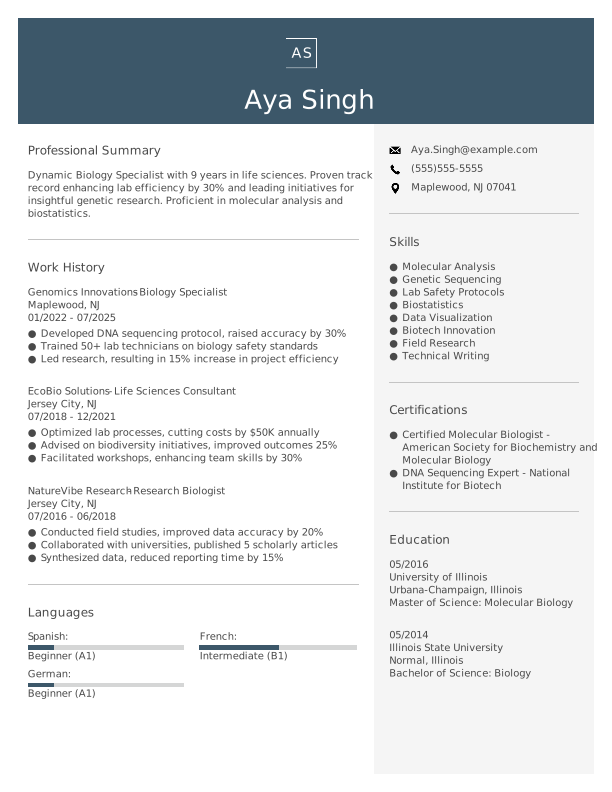
- Quantifies accomplishments: By showcasing measurable accomplishments, like cutting costs by $50K and improving accuracy by 30%, the applicant highlights their tangible impact and value.
- Showcases career progression: Progressing from research biologist to biology specialist reflects a clear trajectory of increasing responsibility, emphasizing leadership roles such as training lab technicians and leading efficiency-focused research initiatives.
- Uses action-oriented language: Strong action verbs such as “developed,” “optimized,” and “facilitated” convey the applicant’s proactive approach to innovation and team-building.
More Biology Resume Examples
Review our biology resume examples to see how to showcase your research expertise, lab skills, and fieldwork experience. These samples provide a strong foundation for creating a resume that highlights your strengths in biological sciences.
Entry-Level Biology Resume
Why this resume works
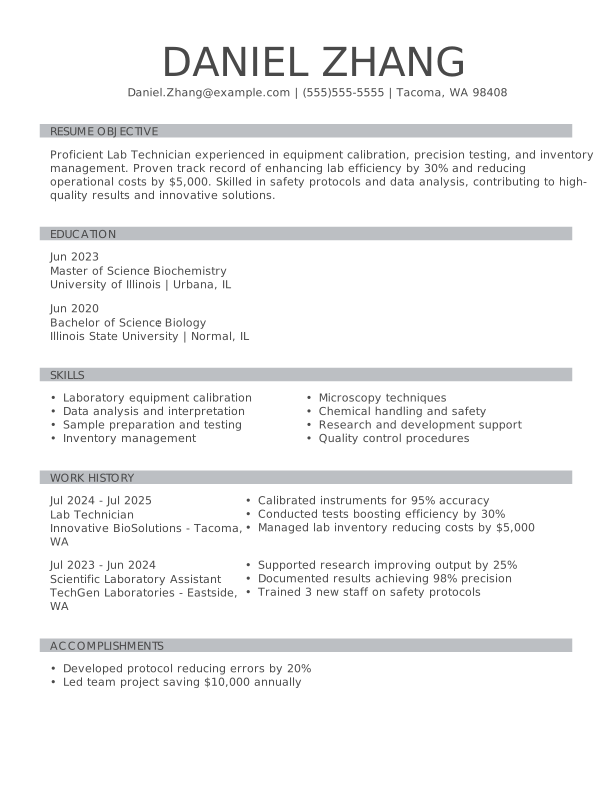
- Effective use of keywords: Strategically including keywords like “calibration,” “testing,” and “inventory management” ensures alignment with ATS and industry expectations.
- Centers on academic background: Listing advanced degrees and honors from reputable institutions emphasizes academic excellence important for early-career professionals.
- Shows digital literacy: Skills in laboratory equipment calibration and data analysis show computer skills and digital literacy.
Mid-Level Biology Resume
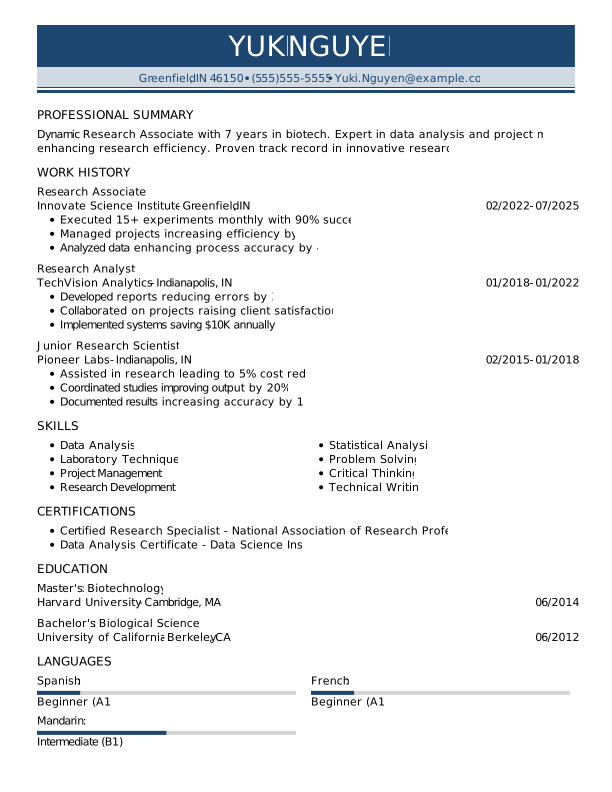
Why this resume works
- Points to measurable outcomes: By showcasing achievements like managing projects that boosted efficiency by 25%, the applicant effectively illustrates their capability to deliver impactful, measurable outcomes in research environments.
- Demonstrates language abilities: Language skills in Spanish, French, and Mandarin facilitate cross-cultural communication and improve international collaboration potential.
- Displays technical expertise: Highlighting certifications such as Certified Research Specialist alongside data analysis expertise emphasizes the applicant’s strong technical foundation for advanced research roles.
Experienced Biology Resume
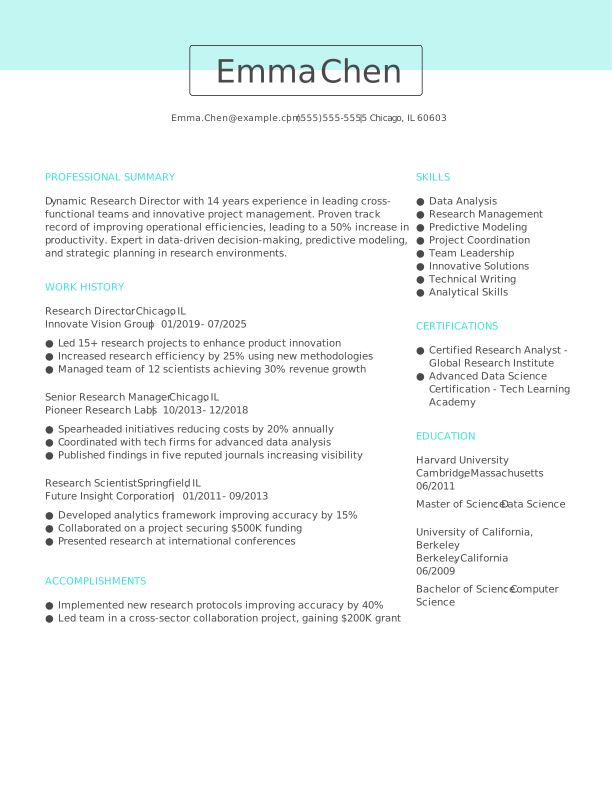
Why this resume works
- Focuses on work history: Using a chronological resume format, the applicant effectively builds a comprehensive narrative of their career growth from research scientist to research director.
- Showcases impressive accomplishments: By detailing achievements like 30% revenue growth and securing $500K in funding, the applicant’s impressive accomplishments show their senior-level impact in research.
- Sections are well-organized: The resume’s clear headers and bullet points make it easy to scan, letting readers quickly grasp key achievements and roles across various positions.
Explore Even More Biology Resumes
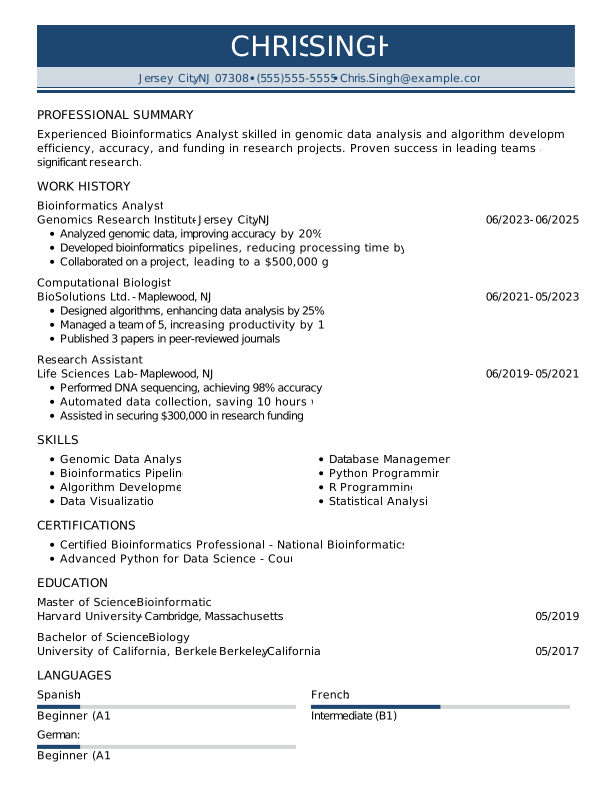
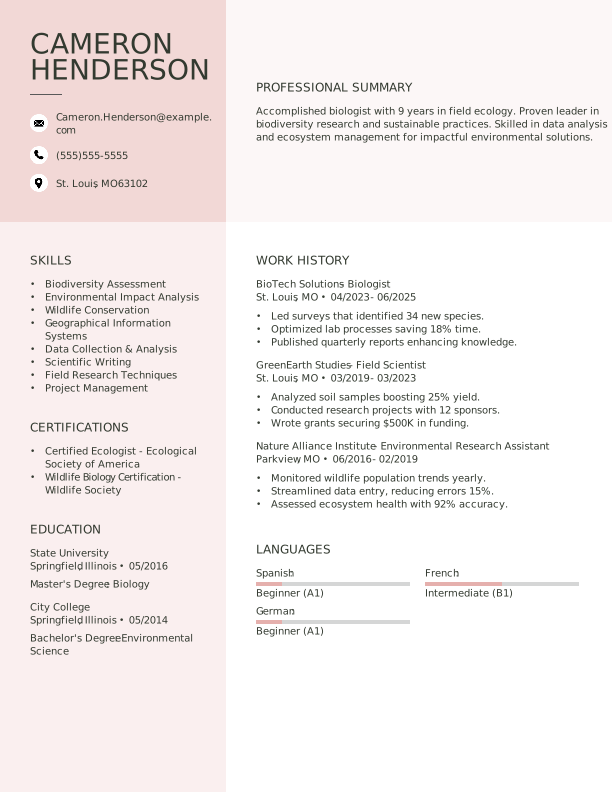
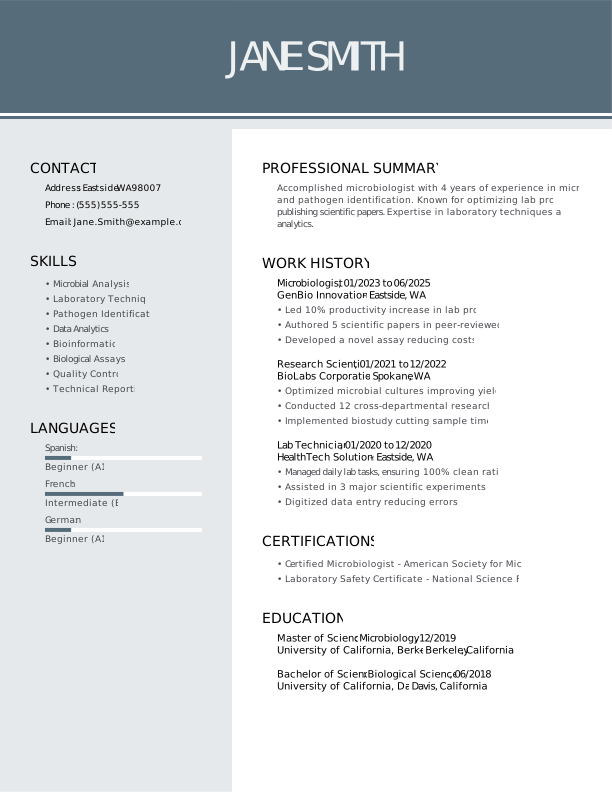
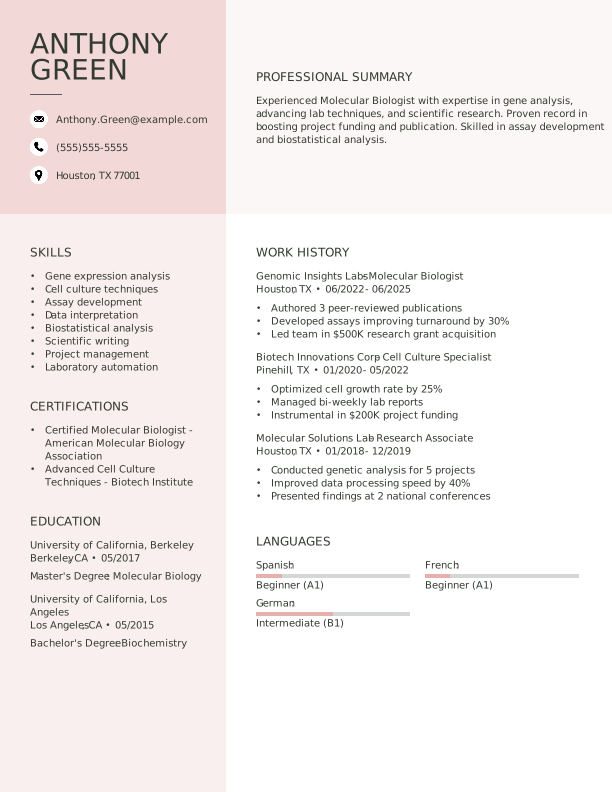
Biology Resume Template (Text Version)
Quick to copy, easy to edit—or discover our resume templates for an even smoother experience.
Aya Singh
Maplewood, NJ 07041
(555)555-5555
Aya.Singh@example.com
Professional Summary
Dynamic Biology Specialist with 9 years in life sciences. Proven track record enhancing lab efficiency by 30% and leading initiatives for insightful genetic research. Proficient in molecular analysis and biostatistics.
Work History
Biology Specialist
Genomics Innovations – Maplewood, NJ
January 2022 – July 2025
- Developed DNA sequencing protocol, raised accuracy by 30%
- Trained 50+ lab technicians on biology safety standards
- Led research, resulting in 15% increase in project efficiency
Life Sciences Consultant
EcoBio Solutions – Jersey City, NJ
July 2018 – December 2021
- Optimized lab processes, cutting costs by $50K annually
- Advised on biodiversity initiatives, improved outcomes 25%
- Facilitated workshops, enhancing team skills by 30%
Research Biologist
NatureVibe Research – Jersey City, NJ
July 2016 – June 2018
- Conducted field studies, improved data accuracy by 20%
- Collaborated with universities, published 5 scholarly articles
- Synthesized data, reduced reporting time by 15%
Languages
- Spanish – Beginner (A1)
- French – Intermediate (B1)
- German – Beginner (A1)
Skills
- Molecular Analysis
- Genetic Sequencing
- Lab Safety Protocols
- Biostatistics
- Data Visualization
- Biotech Innovation
- Field Research
- Technical Writing
Certifications
- Certified Molecular Biologist – American Society for Biochemistry and Molecular Biology
- DNA Sequencing Expert – National Institute for Biotech
Education
Master of Science Molecular Biology
University of Illinois Urbana-Champaign, Illinois
May 2016
Bachelor of Science Biology
Illinois State University Normal, Illinois
May 2014
Browse Resume Examples by Industry
- Aviation
- Banking
- Billing And Collections
- Boating
- Business Operations
- Casino
- Chemistry
- Child Care
- Civil Engineering
- Compliance
- Computer Hardware
- Computer Software
- Construction
- Copywriting
- Cosmetology
- Costco
- Culinary
- Customer Service
- Dance
- Data Systems Administration
- Deloitte
- Dentistry
- Driving
- Education
- Electrical
- Electrical Engineering
- Energy
- Engineering
- Entertainment
- Entrepreneur
- Entry Level
- Environmental
- Environmental Science
- Event Planning
- Executive
- Fashion
- Film
- Finance
- Fitness & Nutrition
- Food Service
- Freelancing
- General Laborer
- Goldman Sachs
- Government
- Graphic Design
- Healthcare Support
- Hospitality
- Human Resources
- HVAC
- Industrial Engineering
- Information Technology
- Insurance
- Interior Design
- Inventory Management
- Janitorial
- Landscaping
- Language Services
- Law
- Law Enforcement
- Library
- Logistics
- Maintenance
- Marketing
- McKinsey
- Mechanical Engineering
- Mechanics
- Media And Communication
- Medical
- Mental Health
- Meta
- Metal Work
- Military
- Mining
- Museum
- Music
- Netflix
- Non Profit
- Nursing
- Pharmaceutical
- Photography
- Physical Therapy
- Plumbing
- Politics
- Production
- Program Manager
- Project Manager
- Psychology
- Purchasing
- Quality Control
- Real Estate
- Religion
- Retail
- Safety And Security
- Sales
- Sciences
- Shipping
- Social Services
- Special Education
- Sports
- Statistics
- Student
- Teaching
- Team Lead
- Tesla
- Training And Development
- Transportation
- Travel
- Veterinary
- Walgreens
- Walmart
- Web Development
Advice for Writing Your Biology Resume
Explore our tips on how to write a resume for a biology position and discover how to highlight your research, lab skills, and passion for science. Whether you’re aiming for a role in environmental biology or working in a cutting-edge biotech firm, we’ve got you covered with profession-specific advice.
Highlight relevant certifications and training
In biology, certifications and specialized training can give you a competitive edge. They highlight expertise beyond your academic background and may be essential for roles that require specific laboratory techniques, teaching methods, or software skills. These credentials can also enhance your qualifications for research, education, environmental, and industry positions.
Relevant certifications for biology careers include:
- STEM Teaching Certification
- Google Certified Educator
- Educational Leadership Certification
- OSHA Laboratory Safety Certification
- First Aid/CPR Certification
- Geographic Information Systems (GIS) Certification
- Bioinformatics Certification
- Laboratory Animal Care & Use Certification
- Scientific Diving Certification
- Hazardous Waste Operations (HAZWOPER) Certification
Earning certifications shows your dedication to professional growth and your willingness to keep learning. Placing a certifications section immediately after education or skills on your resume makes it easy for employers to see your readiness and specialized qualifications.
Example of a certifications & training section
Certified Biological Safety Professional (CBSP)
Issued by: American Biological Safety Association (ABSA)
Issued 2021
Molecular Biology Techniques Workshop
Issued by: Cold Spring Harbor Laboratory
Completed 2023
Biosafety Officer Training Course
Issued by: Centers for Disease Control and Prevention (CDC)
Expires 2025
Genomics Data Analysis Certificate
Issued by: Johns Hopkins University Online
Completed 2022
Advanced Microscopy and Imaging Techniques
Issued by: Marine Biological Laboratory
Completed 2020
Need ideas for your resume? Use these professional resume examples to spark inspiration and create a standout application.
List your most relevant skills
For a role in biology, it’s important to have both technical and soft skills. Technical skills might include knowledge of laboratory equipment, data analysis software, or fieldwork techniques. These skills help you perform specific tasks in research and experiments.
On the other hand, soft skills like communication, teamwork, and problem-solving are essential for working effectively with others and sharing your findings clearly.
Including a dedicated skills section on your resume can be helpful. Here, list any special software you know how to use or any artistic abilities that relate to biology, like creating detailed diagrams or presentations. This gives employers a quick overview of what you can do.
Make sure these skills appear in the work experience section too. When you describe past jobs, mention how you used these skills to achieve something specific. By weaving your skills into your job descriptions, you show employers not just what you know but also how you’ve applied it in real situations.
This approach makes your resume stronger because it provides concrete examples of how you’ve used your skills in biology roles before.
For biology professionals, a resume format that highlights research experience, lab skills, and scientific contributions can improve your application.
Write a strong professional summary
A professional summary is an introduction at the top of your resume that gives hiring managers a quick snapshot of your background and strengths. When writing a resume, you can choose between a professional summary and a resume objective based on what best showcases your experience.
A professional summary is typically three to four sentences long and highlights your experience, skills, and achievements. It’s best suited for people who have been in their field for some time and want to show their professional identity and value quickly.
On the other hand, a resume objective states what you want to achieve in your career. It’s ideal for entry-level applicants, career changers, or those with employment gaps. The main difference is that summaries focus on “what I’ve accomplished,” while objectives emphasize “what I aim to contribute.”
Now let’s look at examples of both summaries and objectives tailored to different industries and levels of experience in biology.
Biology resume summary examples
Entry-level
Recent graduate with a Bachelor of Science in biology, equipped with a strong foundation in laboratory techniques, data analysis, and scientific research. Experienced in conducting experiments during academic projects and skilled in using tools such as PCR and spectrophotometers. Eager to contribute to biological research and environmental conservation initiatives.
Mid-career
Biology professional with 5+ years of experience in molecular biology research and biotechnology applications. Skilled in DNA sequencing, cell culture, and sample preparation for next-generation sequencing platforms. Successfully contributed to the development of innovative solutions for genetic analysis while collaborating with cross-functional teams on high-impact projects.
Experienced
Senior biologist with over a decade of expertise in ecological studies and biodiversity management. Specialized in leading large-scale field research projects, publishing peer-reviewed articles on ecosystem dynamics, and mentoring junior scientists. Proven track record of driving sustainable practices through data-driven insights and partnerships with government agencies and NGOs.
Biology resume objective examples
Recent graduate
Recent biology graduate with a Bachelor of Science degree, eager to apply laboratory skills and foundational knowledge in genetics and ecology. Seeking an entry-level position in a research or environmental organization to contribute to scientific studies and conservation efforts.
Career changer
Passionate educator with a background in teaching high school science transitioning into the field of biology. Looking for an opportunity to leverage experience in curriculum development and student engagement while gaining hands-on experience in biological research or environmental education.
Specialized training
Biology graduate with specialized training in molecular biology techniques, including PCR and DNA sequencing. Aspiring to join a dynamic research team where cutting-edge methods are used to explore genetic variations and disease mechanisms, contributing to meaningful scientific advancements.
Highlight your science skills quickly! Use our Resume Builder to organize your biology experience and achievements so they stand out.
Showcase your accomplishments and publications
Including a publications section can significantly strengthen your biology resume. It demonstrates that you are actively engaged in your field and contributing new knowledge.
List peer-reviewed articles, book chapters, conference papers, and other scholarly works using a clear, consistent citation format—include details such as journal name, volume, issue, year, and page numbers. This makes it easy for employers to quickly identify where your work has appeared.
You can also highlight major awards, grants, and fellowships in this section or a separate Achievements section. These honors show that your research is recognized and valued by others in the scientific community. If you maintain online profiles—such as Google Scholar, ResearchGate, or ORCID—include direct links so employers can explore your work in more depth.
Keep the section organized and concise, focusing on the most relevant and impactful contributions. A well-structured publications section not only showcases your expertise but also reinforces your credibility as a biology professional.
Example of publications section
Publications
- Smith, J., & Lee, A. (2024). The Effects of Ocean Acidification on Coral Reef Biodiversity. Marine Ecology Progress Series, 689, 45–56. https://doi.org/10.xxxx/mepseries.2024.689
- Lee, A., Chen, R., & Martinez, L. (2023). CRISPR-Cas9 Applications in Agricultural Biotechnology: A Review. Journal of Plant Science & Technology, 58(4), 215–229.
- Martinez, L., & Lee, A. (2022). The Role of Mycorrhizal Fungi in Restoring Degraded Grasslands. Ecological Restoration, 40(3), 220–230.
- Lee, A. (2021). Citizen Science as a Tool for Biodiversity Monitoring. Frontiers in Ecology and the Environment, 19(8), 432–439.
Pick a clean resume template with clear headings and ample white space. This simple design lets employers focus on your skills without being distracted by flashy graphics or fonts.
FAQ
Do I need to include a cover letter with my biology resume?
Yes, adding a cover letter to your biology resume can help you stand out to potential employers. A cover letter lets you highlight your passion for biology and explain why you’re particularly interested in the organization or its research.
For example, if the company focuses on environmental conservation or biomedical research, you can discuss how your past experiences align with their mission or projects.
You might find it useful to use tools like our Cover Letter Generator for crafting a personalized and professional cover letter that complements your resume.
Additionally, exploring our collection of cover letter examples can provide inspiration and guidance specific to various roles in the biology field.
How long should a biology resume be?
For a biology role, aim for a one-page resume if you’re early in your career or just starting. Keep it concise by highlighting your education, relevant coursework, lab skills, and any internships or research projects.
As you gain experience and acquire advanced degrees or specialized certifications, a two-page resume may be more suitable. Ensure every detail is relevant, focusing on recent roles and significant achievements in research and laboratory work.
Check out guides on how long a resume should be for tips tailored to different career stages.
How do you write a biology resume with no experience?
If you don’t have direct experience in biology, tailor your resume to emphasize education, relevant coursework, and skills that showcase your potential in the field. Here are a few tips on writing a resume with no experience:
- Emphasize your education: Start with your degree details, including the institution name, graduation date, and any relevant coursework or projects. Mention any honors or awards that demonstrate academic excellence.
- Highlight lab work and research: Include any lab courses, independent studies, or research projects you’ve completed. Describe the techniques used and any findings or outcomes to show practical application of your knowledge.
- Showcase transferable skills: Highlight skills like data analysis, critical thinking, attention to detail, and communication. If you have experience using software tools common in biology, such as Excel or statistical programs, be sure to mention them.
- Include volunteer work or internships: Even if not directly related to biology, but involve scientific tasks or problem-solving activities. These experiences can demonstrate initiative and a proactive approach.
Consider tailoring each section of your resume to align with the specific requirements of the biology roles you’re applying for.
Rate this article
Biology


Elizabeth is a Certified Professional Resume Writer (CPRW) and a member of the Professional Association of Resume Writers & Career Coaches. She is committed to helping job seekers navigate the job market and succeed in their careers.
More Articles by Elizabeth Muenzen, CPRWShare this page
 Add MyPerfectResume as a preferred source on Google
Add