Table of Contents
Get started with MyPerfectResume today!
- Build a resume on any device
- Pick an ATS-friendly template
- Tailor with AI copy suggestions
Why this resume works
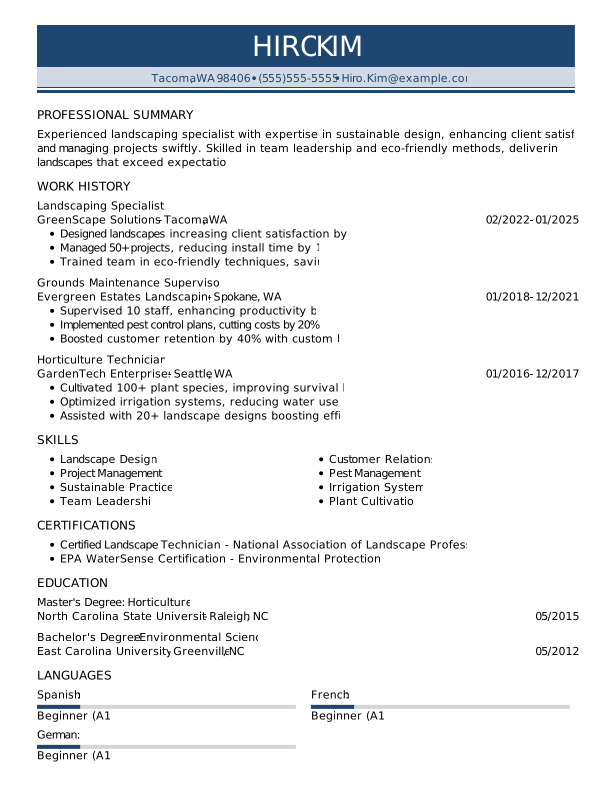
- Highlights industry-specific skills: Focusing on landscape design and eco-friendly methods shows the applicant’s commitment to sustainable practices, important for roles in environmental landscaping.
- Quantifies accomplishments: Incorporating measurable accomplishments like reducing install time by 15% showcases tangible impact and efficiency.
- Uses action-oriented language: Using action verbs such as “designed” and “implemented,” the applicant conveys initiative and a proactive approach.
More Landscaping Resume Examples
See more landscaping resume examples to learn how to highlight your design skills, plant knowledge, and outdoor project experience. These samples will help you create a resume that stands out in the landscaping field.
Landscape Laborer
Why this resume works
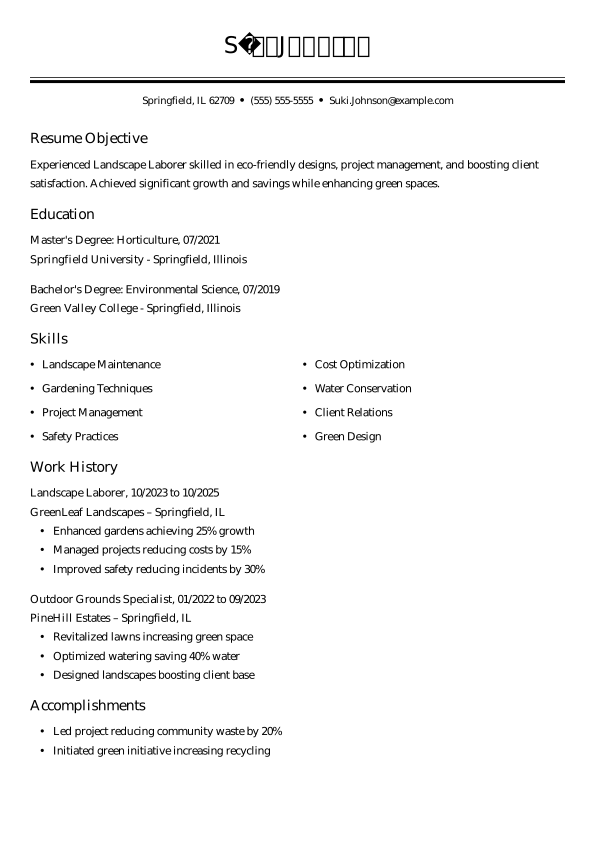
- Effective use of keywords: Strategically weaving in role-relevant keywords like “cost optimization” and “project management” improves the resume’s chances of passing applicant tracking systems (ATS).
- Shows digital literacy: Digital readiness is evident through adept use of platforms for project management, showcasing strong computer skills essential for modern landscape projects.
- Centers on academic background: A master’s degree in horticulture emphasizes a strong academic foundation, important for someone early in their career path.
Lawn Care Technician
Why this resume works
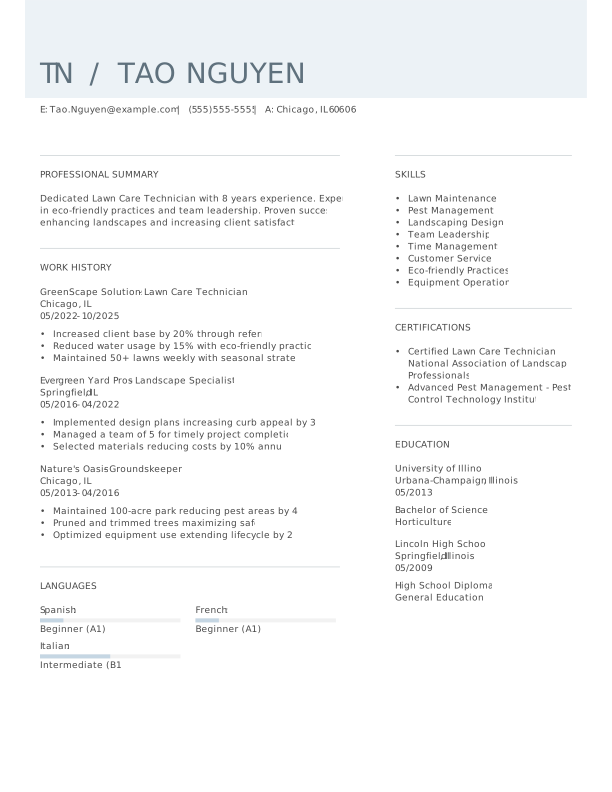
- Points to measurable outcomes: By showcasing achievements like a 30% increase in curb appeal, the applicant highlights their contributions and effectiveness in landscape transformation.
- Demonstrates language abilities: Language skills in Spanish, French, and Italian indicate the applicant’s ability to engage with diverse client bases and foster cross-cultural communication.
- Includes a mix of soft and hard skills: Combining technical expertise with interpersonal skills, the applicant balances eco-friendly practices with exceptional customer service to deliver comprehensive lawn care solutions.
Arborist
Why this resume works
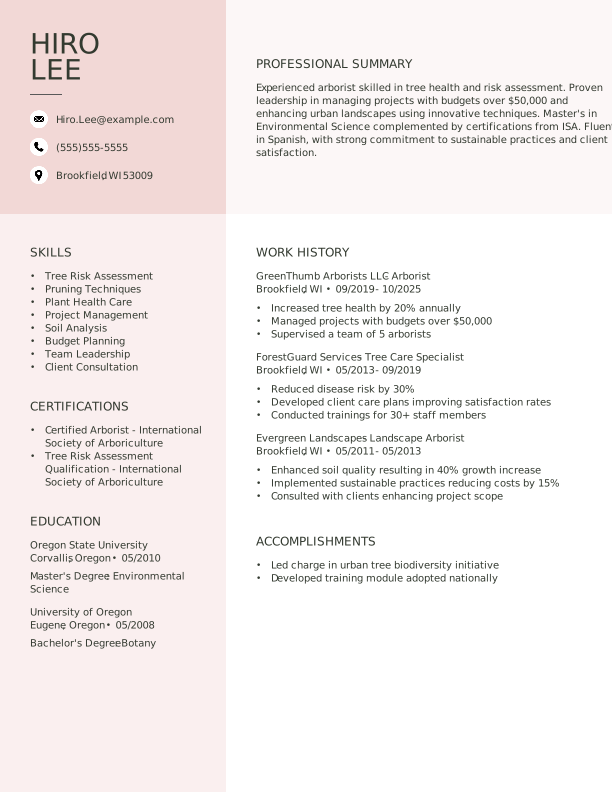
- Lists relevant certifications: The applicant’s certifications in arboriculture and risk assessment highlight a dedication to advancing expertise, aligning with their effective environmental science background.
- Focuses on work history: The chronological resume format highlights the applicant’s extensive experience, from landscape arborist roles to leading large-scale projects.
- Emphasizes leadership skills: The applicant excels in managing teams and budgets, demonstrating leadership skills by spearheading training initiatives adopted nationwide.
Explore Even More Landscaping Resumes
Landscaping Resume Template (Text Version)
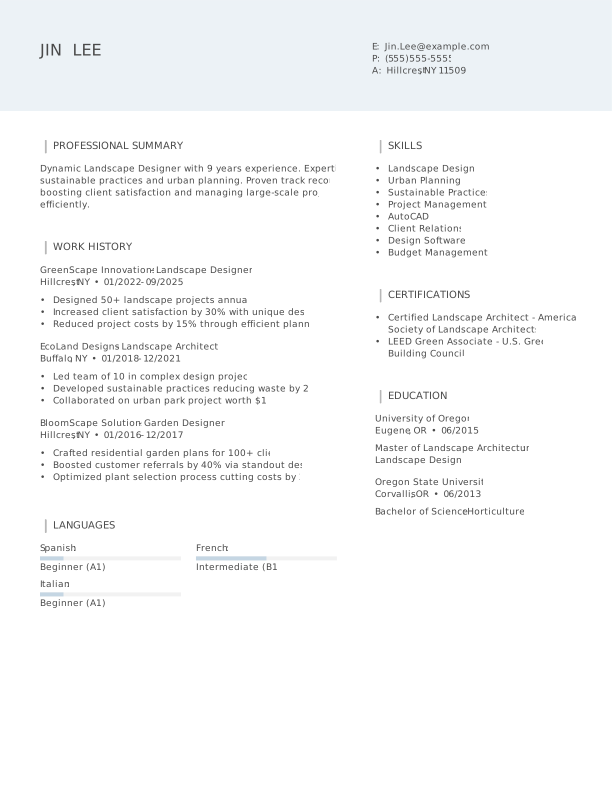
Start with the format below, then check out our resume templates for options suited to your industry.
Hiro Kim
Tacoma, WA 98406
(555)555-5555
Hiro.Kim@example.com
Professional Summary
Experienced landscaping specialist with expertise in sustainable design, enhancing client satisfaction by 30% and managing projects swiftly. Skilled in team leadership and eco-friendly methods, delivering high-quality landscapes that exceed expectations.
Work History
Landscaping Specialist
GreenScape Solutions – Tacoma, WA
February 2022 – January 2025
- Designed landscapes increasing client satisfaction by 30%
- Managed 50+ projects, reducing install time by 15%
- Trained team in eco-friendly techniques, saving $5K
Grounds Maintenance Supervisor
Evergreen Estates Landscaping – Spokane, WA
January 2018 – December 2021
- Supervised 10 staff, enhancing productivity by 25%
- Implemented pest control plans, cutting costs by 20%
- Boosted customer retention by 40% with custom layouts
Horticulture Technician
GardenTech Enterprises – Seattle, WA
January 2016 – December 2017
- Cultivated 100+ plant species, improving survival by 35%
- Optimized irrigation systems, reducing water use by 15%
- Assisted with 20+ landscape designs boosting efficiency
Skills
- Landscape Design
- Project Management
- Sustainable Practices
- Team Leadership
- Customer Relations
- Pest Management
- Irrigation Systems
- Plant Cultivation
Education
Master’s Degree Horticulture
North Carolina State University Raleigh, NC
May 2015
Bachelor’s Degree Environmental Science
East Carolina University Greenville, NC
May 2012
Certifications
- Certified Landscape Technician – National Association of Landscape Professionals
- EPA WaterSense Certification – Environmental Protection Agency
Languages
- Spanish – Beginner (A1)
- French – Beginner (A1)
- German – Beginner (A1)
Browse Resume Examples by Industry
- Aviation
- Banking
- Billing And Collections
- Biology
- Boating
- Business Operations
- Casino
- Chemistry
- Child Care
- Civil Engineering
- Compliance
- Computer Hardware
- Computer Software
- Construction
- Copywriting
- Cosmetology
- Costco
- Culinary
- Customer Service
- Dance
- Data Systems Administration
- Deloitte
- Dentistry
- Driving
- Education
- Electrical
- Electrical Engineering
- Energy
- Engineering
- Entertainment
- Entrepreneur
- Entry Level
- Environmental
- Environmental Science
- Event Planning
- Executive
- Fashion
- Film
- Finance
- Fitness & Nutrition
- Food Service
- Freelancing
- General Laborer
- Goldman Sachs
- Government
- Graphic Design
- Healthcare Support
- Hospitality
- Human Resources
- HVAC
- Industrial Engineering
- Information Technology
- Insurance
- Interior Design
- Inventory Management
- Janitorial
- Language Services
- Law
- Law Enforcement
- Library
- Logistics
- Maintenance
- Marketing
- McKinsey
- Mechanical Engineering
- Mechanics
- Media And Communication
- Medical
- Mental Health
- Meta
- Metal Work
- Military
- Mining
- Museum
- Music
- Netflix
- Non Profit
- Nursing
- Pharmaceutical
- Photography
- Physical Therapy
- Plumbing
- Politics
- Production
- Program Manager
- Project Manager
- Psychology
- Purchasing
- Quality Control
- Real Estate
- Religion
- Retail
- Safety And Security
- Sales
- Sciences
- Shipping
- Social Services
- Special Education
- Sports
- Statistics
- Student
- Teaching
- Team Lead
- Tesla
- Training And Development
- Transportation
- Travel
- Veterinary
- Walgreens
- Walmart
- Web Development
Advice for Writing Your Landscaping Resume
Explore our tips on how to write a resume for a landscaping job and discover how to highlight your green thumb, attention to detail, and passion for outdoor work. Whether you’re crafting beautiful gardens or maintaining lush lawns, these resume-writing strategies will help you stand out in the field of landscaping.
Write a strong professional summary
A professional summary on a resume serves as an introduction for hiring managers, providing a snapshot of your skills and accomplishments. You can decide whether to use a summary or a resume objective based on your experience level and career goals.
A professional summary highlights your experience, skills, and achievements in about three to four sentences. It’s ideal for applicants with significant work history because it showcases their professional identity and the value they offer to potential employers.
In contrast, a resume objective focuses more on career goals rather than past achievements. They are best suited for those who are new to the workforce, changing careers, or have gaps in employment. An objective states what you aim to contribute, making it suitable for entry-level landscapers or those transitioning into landscaping from another field.
Next, we’ll provide examples of both summaries and objectives tailored for different industries and levels of experience. Explore our library of professional resume examples for additional inspiration.
Landscaping resume summary examples
Entry-level
Recent graduate with a Bachelor of Science in environmental design, specializing in landscape architecture. Skilled in CAD software and plant identification, eager to apply sustainable design principles. Completed an internship with a local landscaping firm, where hands-on experience was gained in site analysis and planting designs. Passionate about creating vibrant outdoor spaces that mix aesthetics and functionality.
Mid-career
Seasoned landscaper with over seven years of experience designing and implementing residential and commercial landscape projects. Proficient in hardscape installation, irrigation systems, and plant selection tailored to regional climates. Recognized for completing projects on time within budget and improving client satisfaction through innovative design solutions. Holds certification in landscape management from the National Association of Landscape Professionals.
Experienced
Accomplished landscaping professional with expertise in large-scale urban green spaces and high-end residential gardens. Over 15 years of experience leading teams in complex projects requiring strategic planning and execution across diverse ecosystems. Certified arborist with advanced knowledge of sustainable practices like xeriscaping and permaculture design. Committed to driving environmental stewardship while achieving aesthetic excellence.
Landscaping resume objective examples
Entry-level
Energetic and detail-oriented individual seeking an entry-level position in landscaping to use hands-on skills and passion for outdoor work. Committed to learning industry techniques and contributing to the creation of beautiful, sustainable environments.
Career changer
Dedicated professional transitioning from retail management into landscaping, eager to apply organizational skills and customer service experience in a new field. Looking forward to mastering landscape design and maintenance practices while improving outdoor spaces.
Recent graduate
Recent graduate with a background in horticulture seeking a role in landscaping to apply academic knowledge and creative problem-solving skills. Excited to collaborate with experienced teams in designing visually appealing and eco-friendly landscapes.
Make your landscaping skills shine! Use our AI Resume Builder to quickly add and organize all your gardening and design experience for a standout resume.
Include relevant certifications and training
Listing certifications and training in landscaping shows you have the skills to do the job well. In technical fields like landscaping, having specific credentials can set you apart from others. These qualifications prove that you’ve learned important techniques and safety practices. A dedicated certifications section helps employers quickly see your expertise. Here are a few examples of relevant certifications:
- Certified Landscape Technician
- ISA Certified Arborist
- OSHA 10-Hour Construction Safety Certification
- Master Gardener Certification
- Landscape Design Certificate
These certifications help you stand out in the landscaping field by showing that you’re trained and ready for tough tasks. Employers know they can trust someone with these credentials to handle equipment safely and create beautiful landscapes. Including this section on your resume makes it easier for hiring managers to spot your strengths.
Example of a certifications section
Certified Landscape Professional (CLP)
Issued by: National Association of Landscape Professionals (NALP)
Issued 2022
Landscape Industry Certified Technician
Issued by: National Association of Landscape Professionals (NALP)
Expires 2025
Certified Arborist
Issued by: International Society of Arboriculture (ISA)
Issued 2021
Commercial Pesticide Applicator License
Issued by: State Department of Agriculture
Expires 2024
OSHA 30-Hour Construction Safety Certification
Issued by: Occupational Safety and Health Administration (OSHA)
Issued 2023
Select a polished and well-organized resume template that effectively showcases your skills and qualifications to stand out to hiring managers in your field.
Showcase your work experience
Highlighting your work experience effectively on your resume is essential for standing out in the landscaping industry. Employers are keen to review your past roles and achievements, as this gives them insight into what you can offer their team. Presenting your work history in reverse chronological order allows hiring managers to easily track your career progression.
Start with the most recent job title, followed by the employer name, location, and employment dates. This format emphasizes your current skills and abilities first, clearly illustrating how you can contribute immediately. When detailing each role, use action-oriented language to convey what you’ve accomplished.
Instead of stating “responsible for planting trees,” express it as “planted over 200 trees that increased property value by 15%.” Demonstrating measurable results like these creates a strong impression by showing the impact of your efforts.
For landscaping positions, include core tasks such as landscape design, plant selection, project management, and equipment operation. These specifics provide employers with a sense of your particular expertise. By concentrating on clear descriptions and quantifiable outcomes, you simplify the process for potential employers to recognize why you’re an excellent choice for their landscaping needs.
5 landscaping work history bullet points
- Led a team of 4 to complete a large-scale commercial landscaping project ahead of schedule, resulting in a 15% increase in client satisfaction.
- Implemented sustainable irrigation systems across 20 residential properties, reducing water usage by 25% and lowering costs for clients.
- Redesigned public park landscapes in collaboration with city planners, improving community space usability by 40%.
- Managed seasonal planting schedules and maintenance tasks for over 50 properties, achieving an average 30% improvement in plant health.
- Trained new hires on safe equipment operation and efficient landscaping techniques, decreasing training time by 20%.
A resume format that highlights completed projects, efficiency in task execution, and teamwork can help landscapers stand out.
Match your resume with the job description
Tailoring resumes to job descriptions is essential for job seekers wanting to stand out to employers. This approach ensures that applicants pass through applicant tracking systems (ATS), which scan for specific keywords and phrases from job postings.
An ATS-friendly resume includes the right keywords and phrases to match the skills and qualifications required by the job. By aligning your resume with these terms, you increase your chances of getting noticed by hiring managers.
To identify keywords from landscaping job postings, look for skills, qualifications, and duties mentioned repeatedly. Examples might include “landscape maintenance,” “plant care,” or “equipment operation.”
Incorporate these terms naturally into your resume content. For instance, you might rewrite “Perform landscape maintenance” as “Conducted regular landscape maintenance to improve curb appeal.” It’s also beneficial to customize your resume specifically for each application to improve its effectiveness.
Targeted resumes improve ATS compatibility by ensuring your application gets seen by the right people. By doing so, you’ll have a better chance of securing an interview and ultimately landing the job you desire.
Make sure your resume stands out with the help of our ATS Score Checker, which can find formatting mistakes, missing keywords, and layout problems before you send it out.
Salary Insights for Landscapers
Understanding salary data can help you make informed decisions about your career path and negotiation strategy. Explore key insights below to guide your research.
Top 10 highest-paying states for landscapers
Landscapers earn varying salaries across the United States, with a national average of $49,099. The table below highlights the states where landscapers command the highest compensation.
Our salary information comes from the U.S. Bureau of Labor Statistics’ Occupational Employment and Wage Statistics survey. This official government data provides the most comprehensive and reliable salary information for landscapers across all 50 states and the District of Columbia. The figures presented here reflect the May 2025 dataset, which is the most recent available as of this publication.
| State | Average Salary |
|---|---|
| Massachusetts | $49,130 |
| District of Columbia | $49,130 |
| Washington | $48,260 |
| California | $46,120 |
| Alaska | $46,230 |
| New York | $45,030 |
| Connecticut | $45,710 |
| Minnesota | $45,280 |
| New Hampshire | $44,110 |
| Maine | $44,480 |
FAQ
Do I need to include a cover letter with my landscaping resume?
Yes, including a cover letter with your landscaping resume can improve your application and help you stand out.
A cover letter allows you to highlight specific skills like landscape design or plant care, which may not be fully detailed in your resume.
For example, if a company specializes in eco-friendly landscaping, you could emphasize your experience with sustainable practices or native plants.
Consider using our Cover Letter Generator to craft a personalized message that aligns with the job description and showcases your enthusiasm for their projects.
Additionally, looking at cover letter examples can provide inspiration on how to structure your own and ensure it complements your resume effectively.
How long should a landscaper’s resume be?
For a landscaping role, a one-page resume is often sufficient, especially if you’re just starting out or have limited experience. Focus on highlighting your skills in landscape design, plant knowledge, and any hands-on experience you might have.
If you’ve accumulated extensive experience or possess specialized certifications in areas like sustainable landscaping or advanced horticulture techniques, then a two-page resume could be more appropriate. This allows you to showcase your accomplishments and depth of expertise.
Check out our guide on how long a resume should be for further insights and examples tailored to different career stages.
How do you write a landscaping resume with no experience?
To write a resume with no experience, emphasize your skills and relevant education or volunteer work, demonstrating your potential for the role. Consider these tips to begin crafting your resume:
- Emphasize transferable skills: Highlight skills such as physical stamina, attention to detail, teamwork, and time management. These are important in landscaping and can be drawn from other experiences, like sports or group projects.
- Include relevant coursework or workshops: If you’ve taken classes related to horticulture, environmental science, or attended gardening workshops, list these to show your foundational knowledge.
- Showcase volunteer work: If you’ve volunteered in community gardens or helped with landscaping projects for friends or family, include these as practical experience to demonstrate your hands-on ability.
For more tips on crafting a resume with no experience, consider reviewing sample resumes tailored for entry-level positions to inspire and guide you.
Rate this article
Landscaping


Elizabeth is a Certified Professional Resume Writer (CPRW) and a member of the Professional Association of Resume Writers & Career Coaches. She is committed to helping job seekers navigate the job market and succeed in their careers.
More Articles by Elizabeth Muenzen, CPRWShare this page
 Add MyPerfectResume as a preferred source on Google
Add