Table of Contents
Get started with MyPerfectResume today!
- Build a resume on any device
- Pick an ATS-friendly template
- Tailor with AI copy suggestions
Why this resume works
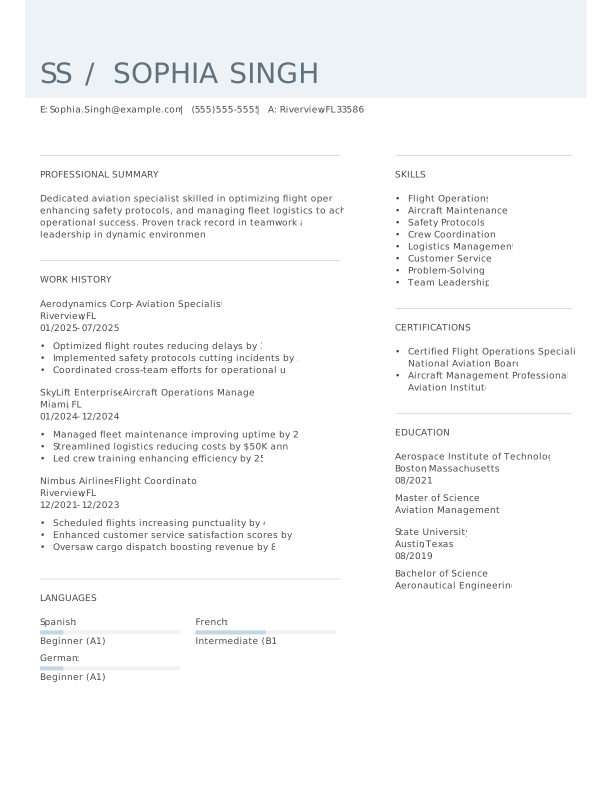
- Highlights industry-specific skills: By optimizing flight routes and implementing safety protocols, the applicant showcases deep industry knowledge important for roles in aviation management and operations.
- Quantifies accomplishments: Measurable accomplishments like cutting incidents by 30% and saving $50K annually quantify the applicant’s impact and value.
- Illustrates problem-solving ability: The initiative to optimize flight routes, reducing delays by 15%, highlights strong problem-solving skills and innovative thinking.
More Aviation Resume Examples
Check out our aviation resume examples to showcase your flight expertise, technical abilities, and safety knowledge. These samples will help you create a resume tailored to roles in the aviation industry.
Entry-Level Aviation Resume
Why this resume works
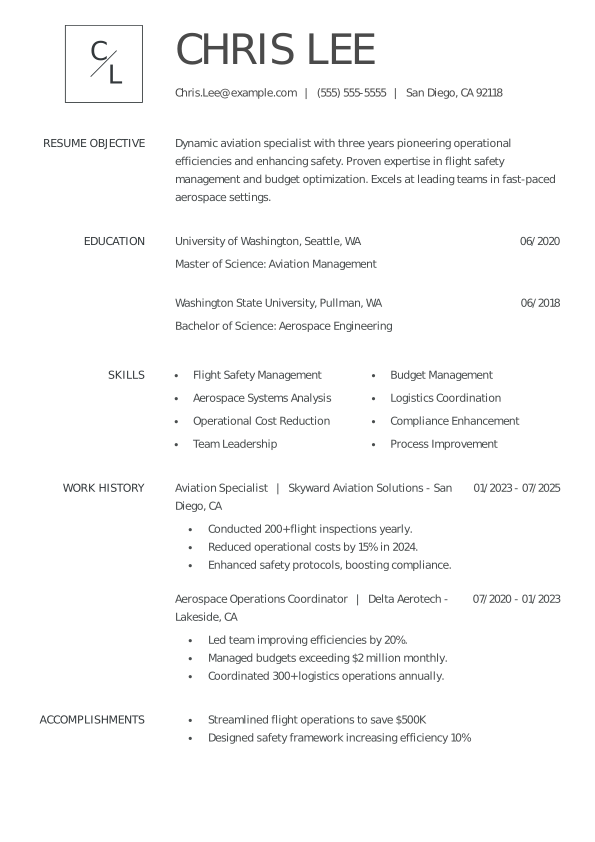
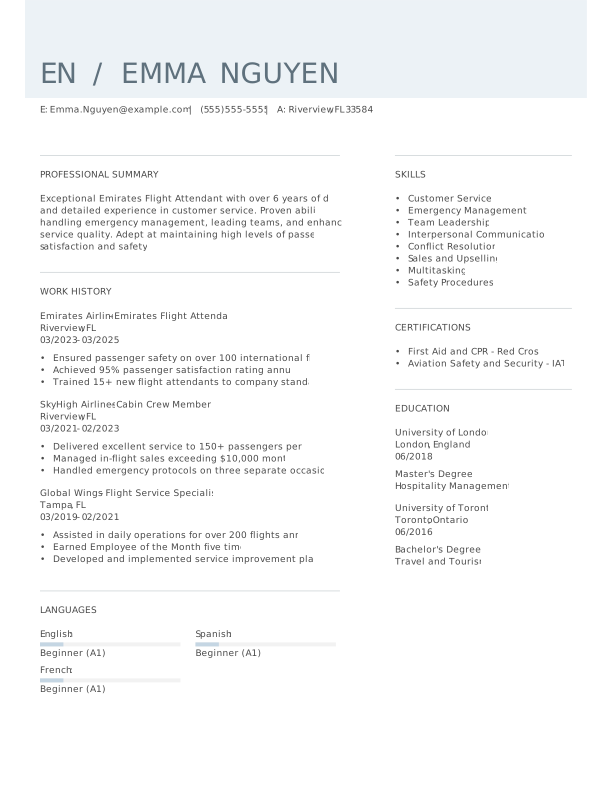
- Centers on academic background: With a master’s in aviation management, the applicant’s educational path lays a strong academic foundation, important for early career growth.
- Puts skills at the forefront: Emphasizing skills like flight safety management and logistics coordination reflects a skills-based resume format, effectively showcasing strengths for new professionals.
- Shows digital literacy: Highlighting achievements in operational cost reduction and compliance enhancement indicates familiarity with essential computer skills, showcasing digital readiness.
Mid-Level Aviation Resume
Why this resume works
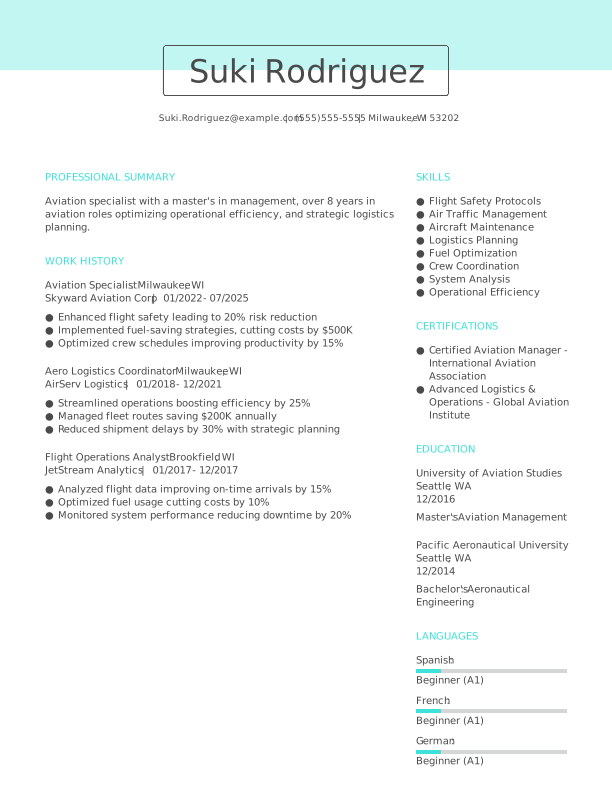
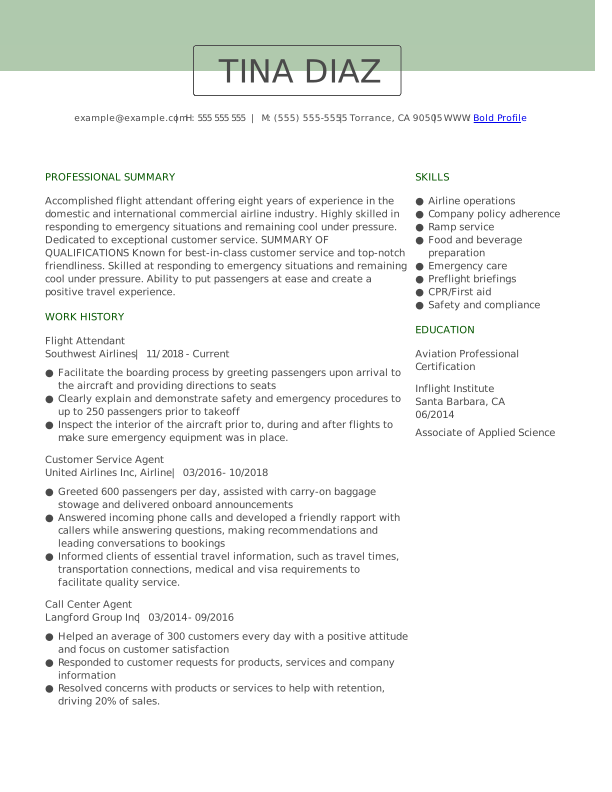
- Points to measurable outcomes: By implementing strategies that cut fuel costs by $500K and optimizing schedules to boost productivity, the applicant clearly shows a knack for achieving measurable impacts in aviation roles.
- Demonstrates language abilities: Listing language skills in Spanish, French, and German supports their ability to engage effectively in cross-cultural aviation environments.
- Displays technical expertise: Possessing certifications like Certified Aviation Manager illustrates the applicant’s technical expertise important for managing complex aviation operations and ensuring high performance across various roles.
Experienced Aviation Resume
Why this resume works
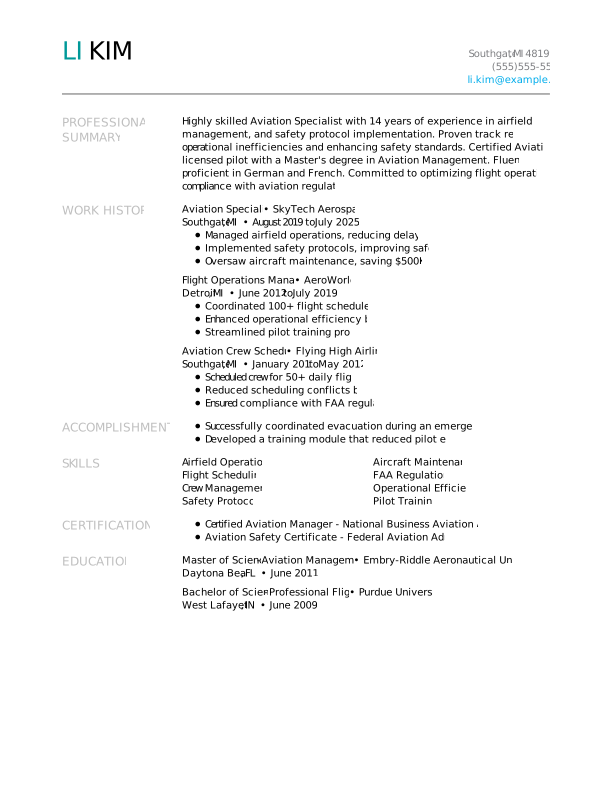
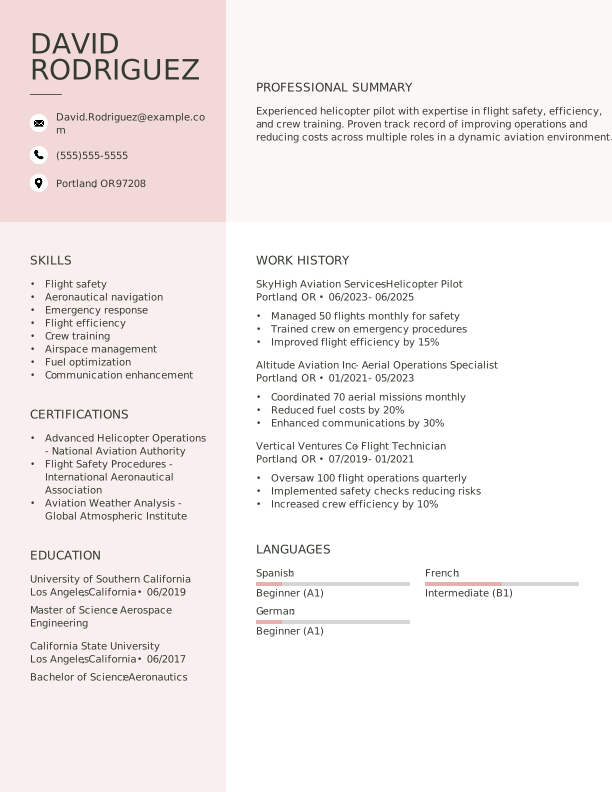
- Lists relevant certifications: Listing certifications, such as Certified Aviation Manager and FAA-issued safety certificate, illustrates a commitment to expertise and ongoing education.
- Showcases impressive accomplishments: Coordinating an emergency evacuation while reducing pilot error by 12% reflects senior-level impact, highlighting key accomplishments in aviation roles.
- Focuses on work history: Organizing job history from crew scheduler to specialist in a chronological resume format shows extensive career progression in aviation.
Explore Even More Aviation Resumes
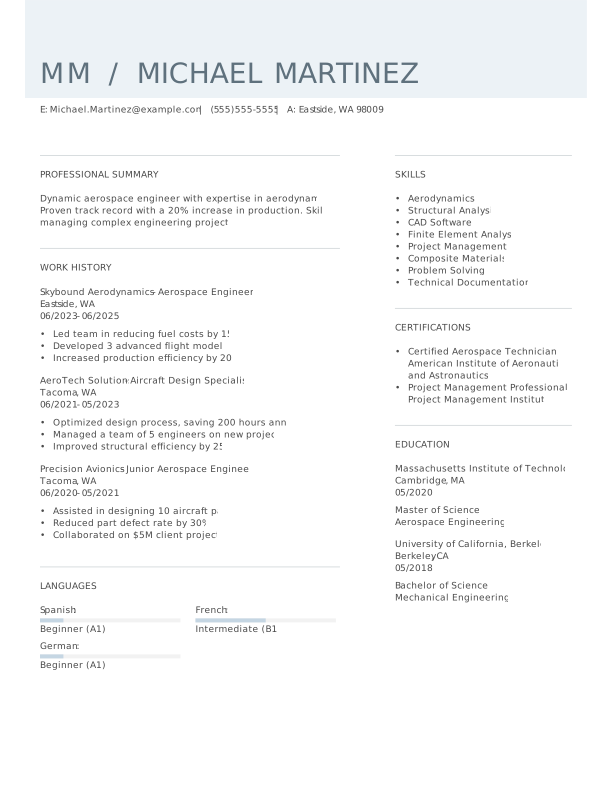
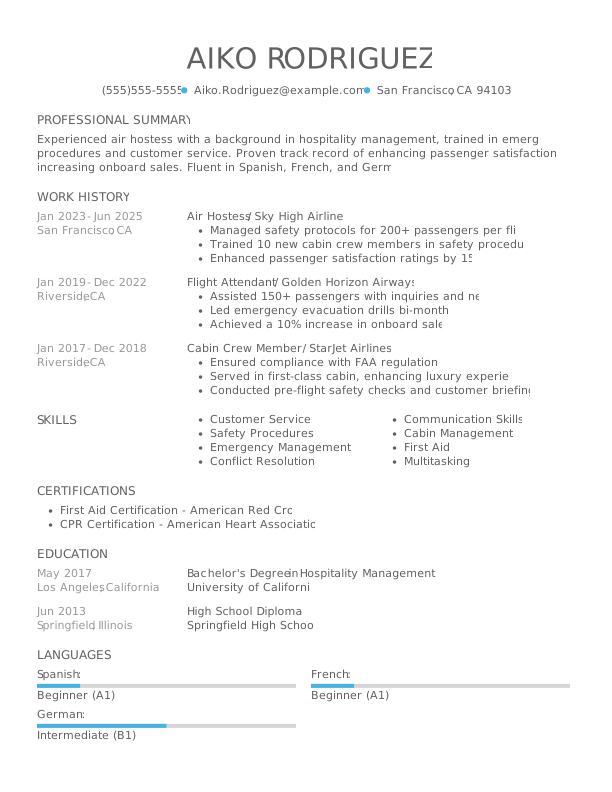
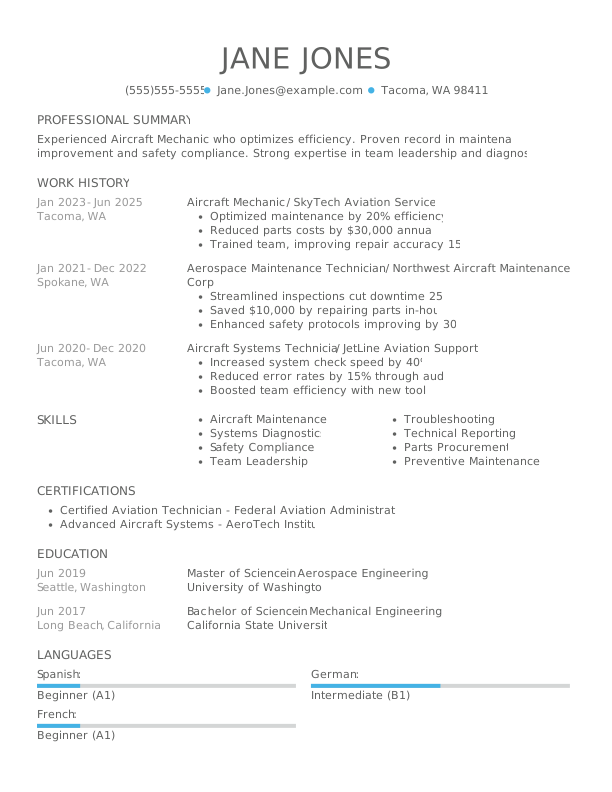
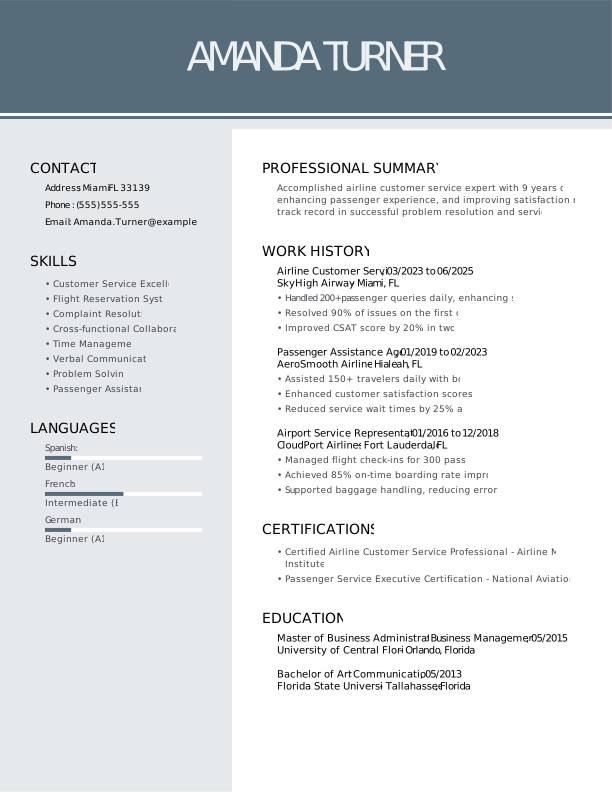
Aviation Resume Template (Text Version)
Strip away the complexity with this text version, or try our resume templates for effortless formatting.
Sophia Singh
Riverview, FL 33586
(555)555-5555
Sophia.Singh@example.com
Professional Summary
Dedicated aviation specialist skilled in optimizing flight operations, enhancing safety protocols, and managing fleet logistics to achieve operational success. Proven track record in teamwork and leadership in dynamic environments.
Work History
Aviation Specialist
Aerodynamics Corp – Riverview, FL
January 2025 – July 2025
- Optimized flight routes reducing delays by 15%
- Implemented safety protocols cutting incidents by 30%
- Coordinated cross-team efforts for operational unity
Aircraft Operations Manager
SkyLift Enterprises – Miami, FL
January 2024 – December 2024
- Managed fleet maintenance improving uptime by 20%
- Streamlined logistics reducing costs by K annually
- Led crew training enhancing efficiency by 25%
Flight Coordinator
Nimbus Airlines – Riverview, FL
December 2021 – December 2023
- Scheduled flights increasing punctuality by 40%
- Enhanced customer service satisfaction scores by 10%
- Oversaw cargo dispatch boosting revenue by 8%
Languages
- Spanish – Beginner (A1)
- French – Intermediate (B1)
- German – Beginner (A1)
Skills
- Flight Operations
- Aircraft Maintenance
- Safety Protocols
- Crew Coordination
- Logistics Management
- Customer Service
- Problem-Solving
- Team Leadership
Certifications
- Certified Flight Operations Specialist – National Aviation Board
- Aircraft Management Professional – Aviation Institute
Education
Master of Science Aviation Management
Aerospace Institute of Technology Boston, Massachusetts
August 2021
Bachelor of Science Aeronautical Engineering
State University Austin, Texas
August 2019
Browse Resume Examples by Industry
- Banking
- Billing And Collections
- Biology
- Boating
- Business Operations
- Casino
- Chemistry
- Child Care
- Civil Engineering
- Compliance
- Computer Hardware
- Computer Software
- Construction
- Copywriting
- Cosmetology
- Costco
- Culinary
- Customer Service
- Dance
- Data Systems Administration
- Deloitte
- Dentistry
- Driving
- Education
- Electrical
- Electrical Engineering
- Energy
- Engineering
- Entertainment
- Entrepreneur
- Entry Level
- Environmental
- Environmental Science
- Event Planning
- Executive
- Fashion
- Film
- Finance
- Fitness And Nutrition
- Food Service
- Freelancing
- General Laborer
- Goldman Sachs
- Government
- Graphic Design
- Healthcare Support
- Hospitality
- Human Resources
- HVAC
- Industrial Engineering
- Information Technology
- Insurance
- Interior Design
- Inventory Management
- Janitorial
- Landscaping
- Language Services
- Law
- Law Enforcement
- Library
- Logistics
- Maintenance
- Marketing
- McKinsey
- Mechanical Engineering
- Mechanics
- Media And Communication
- Medical
- Mental Health
- Meta
- Metal Work
- Military
- Mining
- Museum
- Music
- Netflix
- Non Profit
- Nursing
- Pharmaceutical
- Photography
- Physical Therapy
- Plumbing
- Politics
- Production
- Program Manager
- Project Manager
- Psychology
- Purchasing
- Quality Control
- Real Estate
- Religion
- Retail
- Safety And Security
- Sales
- Sciences
- Shipping
- Social Services
- Special Education
- Sports
- Statistics
- Student
- Teaching
- Team Lead
- Tesla
- Training And Development
- Transportation
- Travel
- Veterinary
- Walgreens
- Walmart
- Web Development
Advice for Writing Your Aviation Resume
Explore our advice on how to write a resume for aviation roles. Whether you’re a pilot, air traffic controller, or aircraft mechanic, crafting a standout resume is key to landing your dream job in the skies.
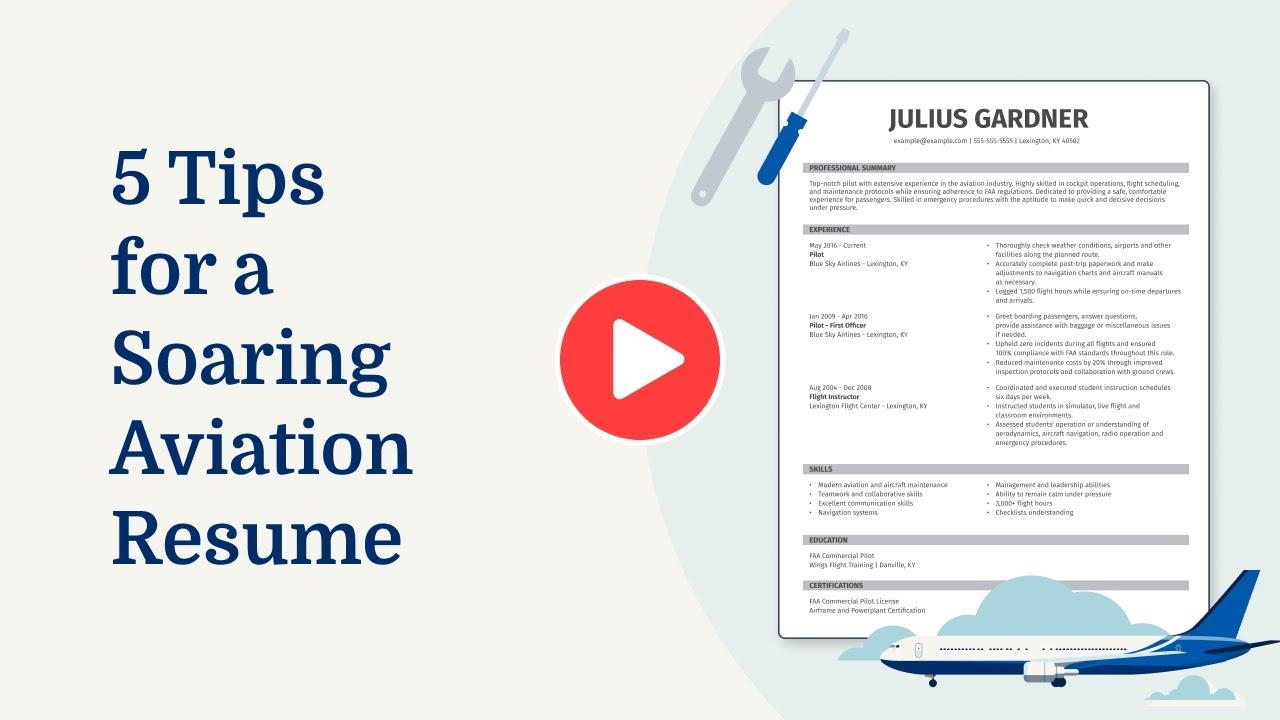
Highlight relevant technical skills
In the aviation field, having strong technical skills is essential. These skills help you solve problems, fix equipment, and ensure everything runs smoothly. You can create a separate skills section on your resume to clearly show off these abilities, making it easy for employers to see what you can do.
Alternatively, you could highlight these skills in your work experience section by explaining how you’ve used them in past jobs. When listing technical skills for an aviation job, consider the tools and systems you’ve worked with. Common skills include understanding aircraft systems, maintenance procedures, and knowledge of aerodynamics.
Being able to use diagnostic tools or flight simulation software adds value. Don’t forget to mention any experience with safety regulations or quality control processes as well. Focus on practical advice when describing your technical skills.
For example, instead of just stating that you’re good at using diagnostic equipment, explain how you used it to identify an issue with an aircraft system in a previous role. This approach not only shows what you know but also how you’ve applied it in real-life situations.
Example of a technical skills section
- Flight operations management
- Aircraft maintenance software (AMOS, TRAX)
- Aviation safety protocols
- Navigation systems (GPS, VOR, ils)
- Weather forecasting tools
- Aerodynamics and aviation physics
- Airport ground handling procedures
- Avionics troubleshooting and repair
- Fuel management systems
Build a standout resume in minutes with our easy-to-use AI Resume Builder. Choose a professional template, add your details, and make a strong impression on aviation employers.
Quantify your accomplishments
Quantifying accomplishments in a resume makes it stand out because it shows exactly what you’ve achieved. Instead of just listing what you did, like “managed flight operations,” you can say, “improved on-time departures by 20% over six months.”
This gives the hiring manager a clear picture of your impact. In the work experience section, it’s important to include your job title, employer name, location, and employment dates. This helps set the stage for understanding where and when you made those achievements.
For an aviation role, turning duties into measurable achievements is key. Use action verbs and specific numbers to show results. Instead of saying “handled maintenance schedules,” try “reduced aircraft downtime by 15% through efficient scheduling.”
This approach shows how your actions led to positive outcomes like time savings or cost reductions. It highlights your skills in a way that’s easy for hiring managers to understand quickly.
Quantified accomplishments help hiring managers see your value at a glance. They don’t have to guess what kind of worker you are; they can see it from the numbers and outcomes you’ve provided. This makes your resume more compelling and increases your chances of getting noticed for an interview.
5 aviation work history bullet points
- Managed daily flight operations for a fleet of 50 aircraft, achieving a 98% on-time departure rate.
- Led a team of 10 maintenance technicians, reducing aircraft downtime by 25% through strategic scheduling and resource allocation.
- Implemented new safety protocols that decreased incident reports by 15%, improving overall passenger safety.
- Coordinated with cross-functional teams to streamline the logistics process, cutting operational costs by $200,000 annually.
- Developed an advanced fuel management system that improved fuel efficiency by 12%, saving the company $500,000 per year.
Looking at professional resume examples can spark ideas and show you how to make your skills stand out, no matter what job you’re aiming for.
Write a powerful professional summary
A professional summary on a resume serves as an introduction to hiring managers, giving them a quick snapshot of who you are. When crafting your resume, you need to decide whether to use a summary or an objective.
A professional summary is a brief section at the top of your resume that highlights your experience, skills, and achievements in about three to four sentences. It’s best suited for experienced applicants who want to showcase their professional identity and value right away.
In contrast, a resume objective is a statement of your career goals. It works well for entry-level candidates, career changers, or those with employment gaps. While summaries focus on “what I’ve accomplished,” objectives emphasize “what I aim to contribute.”
Next, we’ll provide examples of both summaries and objectives tailored to various industries and experience levels.
Aviation resume summary examples
Entry-level
Recent aviation management graduate with a Bachelor of Science in Aviation and FAA-certified private pilot license. Strong foundational knowledge in flight operations, safety procedures, and air traffic control protocols. Experienced in using flight simulation software and committed to pursuing a career in the aviation industry.
Mid-career
Experienced commercial pilot with over 2,000 flight hours on regional jets and turboprop aircraft. Skilled in navigating complex airspace, conducting pre-flight inspections, and ensuring passenger safety. Holds an ATP certificate and type ratings for multiple aircraft models. Known for quick decision-making skills and maintaining exceptional safety records.
Experienced
Veteran airline captain with more than 15 years in command of long-haul international flights. Expertise in advanced avionics systems, crew resource management, and emergency response coordination. Holds multiple type ratings, including Boeing 777 and Airbus A350. Proven track record of improving operational efficiency and mentoring junior pilots to uphold high safety standards.
Aviation resume objective examples
Recent graduate
Aspiring aviation professional with a Bachelor of Science in aviation management eager to begin a career in the airline industry. Excited to use academic knowledge and internship experience in flight operations to support efficient and safe air travel for passengers.
Career changer
Dynamic individual transitioning from hospitality into aviation, bringing exceptional customer service skills and a keen interest in aircraft operations. Ready to contribute positively to airline ground staff teams by improving passenger experiences through effective communication and problem-solving abilities.
Specialized training
Recently certified airframe technician seeking entry-level position in aircraft maintenance with an emphasis on safety and precision. Committed to applying technical skills acquired through specialized training programs to ensure optimal performance and reliability of aircraft systems.
Select a clean resume template with clear headings and simple fonts. Keep colors and graphics minimal to ensure your skills, experience, and education are easily noticeable by employers.
Showcase your credentials
In the field of aviation, having proper certifications and licenses is very important. These credentials show that you have the skills and knowledge needed for this technical job. They help employers see that you can handle important tasks safely. By creating a dedicated certifications section on your resume, you can highlight these achievements clearly. This section should be placed alongside your education details to give a full picture of your qualifications. Here are a few examples for your resume:
- FAA Private Pilot License
- Airline Transport Pilot Certificate
- Certified Flight Instructor (CFI)
- Aircraft Maintenance Technician Certification (AMT)
- Aerospace Engineering Certification
Listing these certifications on your resume can set you apart in the aviation industry. They show you’re ready to meet challenges in a safe and professional way. Having such credentials makes it easier to advance in your aviation career.
Example of a certifications section
Commercial Pilot License (CPL)
Issued by: Federal Aviation Administration (FAA)
Issued 2021
Airline Transport Pilot License (ATPL)
Issued by: European Union Aviation Safety Agency (EASA)
Expires 2025
Certified Flight Instructor (CFI)
Issued by: Federal Aviation Administration (FAA)
Issued 2020
Aviation Maintenance Technician Certification
Issued by: National Center for Aerospace & Transportation Technologies (NCATT)
Expires 2024
Aircraft Dispatcher License
Issued by: Federal Aviation Administration (FAA)
Issued 2019
Use a polished and professional resume format that aligns with your experience level to ensure your skills and qualifications stand out to hiring managers.
FAQ
Do I need to include a cover letter with my aviation resume?
Yes, including a cover letter with your aviation resume can make a significant difference in your application. It allows you to highlight specific experiences or skills that align with the job requirements, like flight hours or aircraft maintenance expertise.
If the airline or aviation company you’re applying to emphasizes particular values, such as sustainability practices or passenger safety innovations, mention how your background aligns with these areas.
Consider using tools like our Cover Letter Generator to create a tailored letter that complements your resume and strengthens your overall application.
Additionally, checking out cover letter examples designed for aviation roles can offer helpful ideas and inspiration for crafting an engaging letter.
How long should an aviation resume be?
For an aviation professional, a one-page resume is usually enough to show your main skills and experiences, especially if you’re just starting. Focus on important qualifications like pilot licenses, flight hours, or specific technical expertise that are important in the aviation field.
If you have extensive experience or specialized certifications such as type ratings on multiple aircraft or advanced aeronautical training, a two-page resume can be suitable. Make sure every detail counts and highlights your impact in previous roles.
Explore our guide on how long a resume should be for examples and tips on figuring out the best length for your career stage.
How do you write an aviation resume with no experience?
Creating a resume with no experience for an aviation job means focusing on your education, skills, and activities that relate to aviation. Here are a few tips to help you get started:
- Emphasize education: Start by listing your degree in aviation or related fields. Include your school name, graduation date, and any honors or relevant coursework that applies to aviation principles.
- Showcase transferable skills: Highlight skills such as teamwork, problem-solving, communication, analytical abilities, and attention to detail. If you’ve taken part in group projects or simulations during your studies, describe those experiences.
- Include certifications and training: If you have completed any FAA exams or other aviation-related certifications, list them. Mention any workshops, seminars, or additional training sessions you’ve attended.
- Leverage volunteer work or extracurricular activities: If you participated in aviation clubs, competitions like drone flying contests, or volunteered at airshows, include these as they demonstrate passion and initiative in the field.
Consider tailoring your resume to each job application by using keywords from the job description that match your background and aspirations.
Rate this article
Aviation


Elizabeth is a Certified Professional Resume Writer (CPRW) and a member of the Professional Association of Resume Writers & Career Coaches. She is committed to helping job seekers navigate the job market and succeed in their careers.
More Articles by Elizabeth Muenzen, CPRWShare this page